
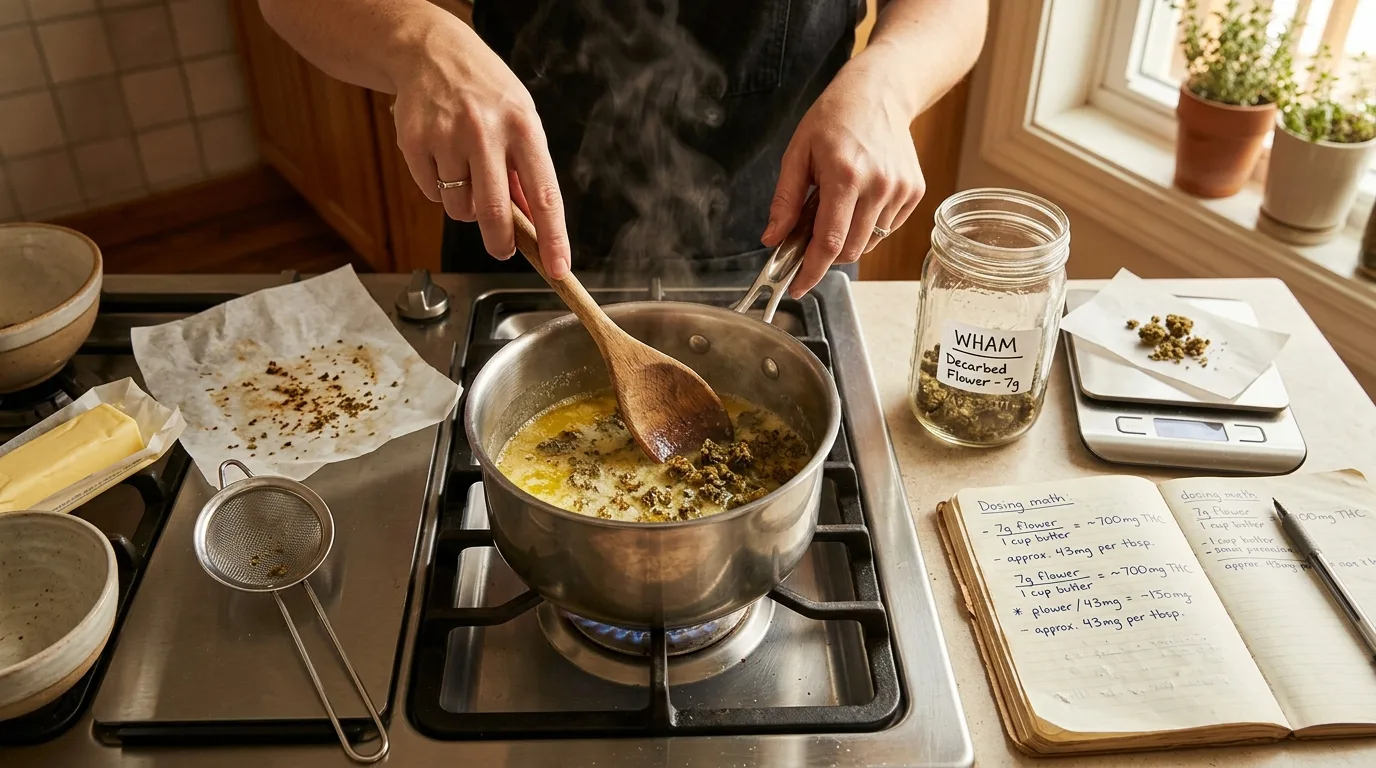
How to Make THC Edibles at Home: Decarboxylation, Infusion, and the Dose Math That Keeps Your First Batch From Wrecking You
Edibles are simple chemistry: decarb your flower at low temperature, infuse it into a fat carrier, then bake or mix into your final recipe. The mistakes that ruin a batch are all on the dosing side. Here's the full process plus the math that gets you a 10mg gummy instead of a 90mg cake square.
Edibles are simple chemistry once you understand the two steps that matter. Step one: turn the THCa in your flower into psychoactive Delta-9 THC by heating it (decarboxylation). Step two: dissolve that THC into a fatty carrier — butter, coconut oil, MCT — that your body can absorb when eaten. Everything after that is just baking.
The mistakes that ruin a batch — under-dosing, over-dosing, weak effects, the friend who ate three brownies because 'nothing was happening' and ended up on the floor — are all on the math side, not the cooking side. This guide walks the full process: decarb, infusion, the standard butter and oil recipes, and the dose-math formula that gets you a 10mg gummy instead of a 90mg cake square.
The Two-Step Chemistry
Step 1 — Decarboxylation
Raw THCa is not psychoactive. Eat a pound of raw flower and you'll get sleepy from the volume, not high. Heat removes a carboxyl group (a -COOH) from the molecule, converting THCa to Delta-9 THC. The conversion is the entire reason your weed gets you high when you smoke it — combustion is just decarboxylation happening fast.
For edibles, you have to decarb the flower before infusing. If you skip this step, your butter will contain THCa (which the body absorbs poorly orally) rather than THC, and your edibles will be near-inactive.
Step 2 — Fat-Soluble Infusion
THC and most cannabinoids are fat-soluble — they dissolve into oils and fats far better than into water. To make an edible, you have to dissolve the decarbed THC into a fatty carrier first, then incorporate that carrier into your recipe. Butter, coconut oil, MCT oil, ghee, lard, and high-fat dairy all work. Water-based recipes (broths, juices) do not work for cannabis infusion without an emulsifier.
Decarb gives you active THC. Fat-soluble infusion makes the THC bioavailable when you eat it. Skip either and your batch flops. Do both right and your batch works every time.
The Decarb Protocol
The single decarb protocol that works for the vast majority of home recipes:
Preheat oven to 240°F. Use an oven thermometer if you don't trust your dial — temperatures above 260°F start volatilizing terpenes and degrading THC into less-potent CBN.
Break flower into pea-size chunks. Don't grind to powder — too fine creates hot spots. Pea-size pieces decarb evenly.
Spread on parchment-lined sheet pan. Single layer. Loosely covered with foil so the volatilized cannabinoids don't escape.
Bake 40 minutes. Stir gently at the 20-minute mark. The flower should look slightly darker — toasted hay color, not burnt.
Cool completely before infusing. Hot flower thrown into hot butter is fine but won't improve potency further. Cool flower keeps your hands safe.
What this accomplishes: Roughly 70% of the THCa in the flower converts to active THC. Higher conversion is possible with longer/hotter decarb but at the cost of degrading the THC you've already made into CBN. 70% conversion is the sweet spot for potency without degradation.
Recipe 1 — Cannabutter (Slow-Cooker Method)
The classic. Butter holds 4–5g of decarbed flower comfortably per cup of butter.
Ingredients
1 cup unsalted butter (2 sticks)
1 cup water (prevents scorching)
7–14g decarbed THCa flower (depending on potency target — see dose math)
Method
Combine water and butter in a slow cooker on LOW. Wait for butter to fully melt.
Add decarbed flower. Stir.
Cook on LOW for 4 hours. Stir gently every 30 minutes. Temperature should stay between 160°F and 200°F — above 220°F you'll lose terpene profile.
Strain through cheesecloth into a glass jar. Press the cheesecloth gently — don't squeeze hard, or you'll force chlorophyll into the butter and the flavor will turn grassy.
Refrigerate until butter solidifies on top. The water layer will be at the bottom — discard it. The butter on top is your cannabutter.
Store covered in refrigerator for up to 3 weeks, or in freezer for up to 6 months.
Recipe 2 — Cannabis Coconut Oil
The more versatile carrier. Coconut oil holds more cannabinoid per cup than butter (higher saturated fat content) and works in gummies, capsules, salad dressings, smoothies, baked goods, and raw recipes.
Ingredients
1 cup unrefined coconut oil
7–14g decarbed THCa flower
Method (Double Boiler)
Set up a double boiler — water in a saucepan, heat-safe glass bowl on top.
Add coconut oil to the bowl. Heat gently until fully melted.
Add decarbed flower. Stir.
Maintain 180–200°F (NOT boiling — keep the simmer below the bowl very gentle) for 3 hours. Stir every 20–30 minutes.
Strain through cheesecloth into a clean jar.
Cools solid at room temperature in cool climates; liquid in warm climates. Both work in recipes — just measure by weight, not volume.
The Dose Math (The Part That Matters)
This is the single most important section of the guide. Get the math right and your batches are reliable; get it wrong and you'll either waste flower or accidentally hospitalize a friend.
The Formula
Total mg of THC in batch = (grams of flower) × (THCa % as decimal) × 1000 × 0.877 × 0.70
Then: mg per serving = total mg ÷ (number of finished servings)
Each Factor Explained
Grams of flower. Weigh on a kitchen scale to the nearest 0.1g.
THCa %. From the lab certificate (COA). Use the TOTAL THC percentage if listed; otherwise THCa % is close enough. Convert percentage to decimal — 22% becomes 0.22.
× 1000. Converts grams to milligrams.
× 0.877. Decarb mass-loss factor. Decarboxylation removes one CO2 molecule, reducing the mass of the cannabinoid by about 12.3%. Multiplying by 0.877 accounts for this.
× 0.70. Extraction efficiency. Roughly 70% of the THC in the flower ends up in the butter or oil after a clean infusion. The other 30% stays in the spent plant matter or is lost to oxidation.
Worked Example
Goal: I want to make a batch of brownies where each brownie has 10mg of THC.
Starting material: 7g of flower at 22% THCa.
Math: 7 × 0.22 × 1000 × 0.877 × 0.70 = 945 mg total THC in the finished cannabutter.
If recipe uses all the butter and yields 16 brownies: 945 ÷ 16 = 59 mg per brownie. Too strong.
To get to 10mg per brownie: Make a batch of brownies that yields 94 brownies (945 ÷ 94 = 10) — impractical. Or use less flower: aim for 1.2g of 22% flower for the same recipe, giving you 162mg total / 16 brownies = ~10mg per brownie.
Practical compromise: Make the cannabutter with 7g, but use only a fraction of it in the recipe. Mix 1/6 of the cannabutter with 5/6 regular butter in the recipe. Now each brownie has ~10mg. Refrigerate the remaining cannabutter for next time.
Dosing Guidance for Different Audiences
First-Time Edible User
2.5–5 mg. Yes, really. Edibles hit harder than smoked cannabis at the same mg dose because the liver converts THC to 11-hydroxy-THC, a stronger and longer-lasting metabolite. Start low.
Occasional User
5–10 mg. The sweet spot for most adult social use. Mild euphoria, relaxation, no overwhelm.
Regular User
10–20 mg. Comfortable for daily flower smokers on edible occasions.
High-Tolerance User
20–50 mg. Daily concentrate users with built-up tolerance. Anything above 50mg should be reserved for high-tolerance users or therapeutic applications.
Critical Reminder
Wait 90 minutes before re-dosing. The #1 mistake — possibly the only mistake that lands people in emergency rooms — is taking a second dose because the first 'isn't working yet.' Edibles take 60–120 minutes to onset. Wait it out.
Recipe Examples Using Your Cannabutter
Quick Microwave Mug Brownie
1 tbsp cannabutter (or cannabutter blended with regular butter to target dose) + 2 tbsp cocoa + 3 tbsp flour + 3 tbsp sugar + 3 tbsp milk + pinch salt. Whisk in mug. Microwave 90 seconds. Cool slightly.
THCa Gummies (Coconut Oil Base)
Mix 1/4 cup fruit juice + 2 tbsp gelatin + 1 tbsp cannabis coconut oil + 1 tbsp honey. Heat gently until smooth. Pour into silicone gummy molds. Refrigerate until set. Each gummy = total batch mg ÷ number of gummies.
Pasta and Olive Oil
Substitute 1–2 tbsp of cannabis coconut oil (melted) for olive oil in a finishing drizzle. Cannabis coconut oil + garlic + chili flakes over pasta is a fast adult dinner.
Salad Dressing
Whisk 2 tbsp olive oil + 1 tsp cannabis coconut oil + 1 tbsp lemon juice + 1 tsp dijon + salt. The cool dressing keeps the cannabis oil emulsified.
Storage and Shelf Life
Cannabutter: 3 weeks refrigerated, 6 months frozen.
Cannabis coconut oil: 6 months refrigerated, 1 year frozen.
Finished edibles: As long as the non-cannabis version would last — gummies 2 weeks refrigerated, brownies 3–4 days at room temperature, capsules 6 months.
Store in opaque or amber glass. Heat, light, and oxygen all degrade THC into CBN over time. CBN is sedating but less euphoric — old edibles tend to be sleepier than fresh ones, not weaker.
Edibles vs Smoked vs Concentrates
Quick refresher on why you'd pick edibles over the alternatives:
Edibles: Long duration (4–8 hours), slow onset (60–120 min), stronger high per mg. Best for evening, chronic pain, sleep, sustained social occasions.
Flower: Fast onset (5–10 min), short duration (2–3 hours), social and ritualistic. See our flower selection guide.
Concentrates: Fastest onset, strongest hit per inhalation, highest potency per gram. See our flower vs concentrate guide.
Where to Buy Flower for Cooking
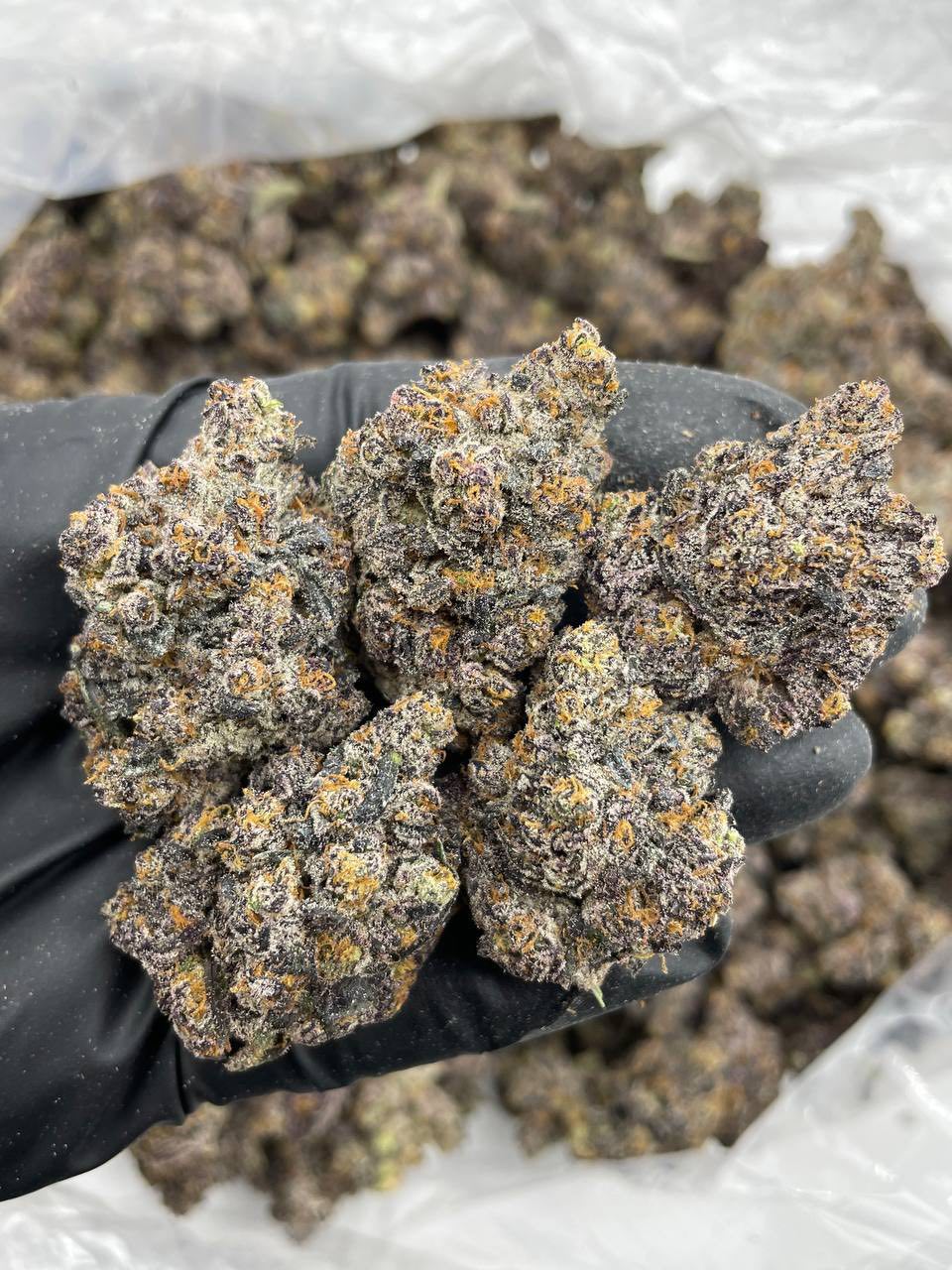
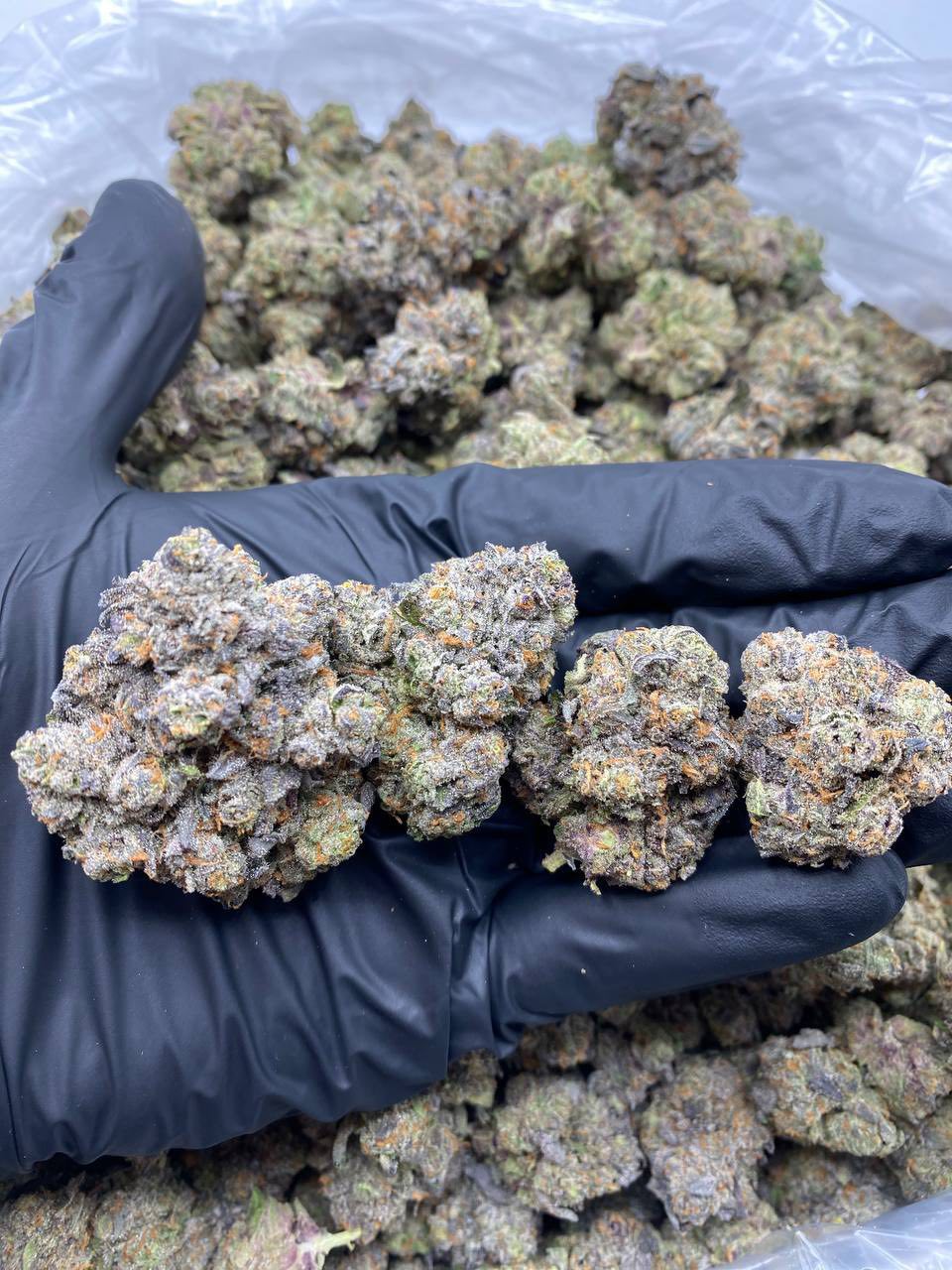
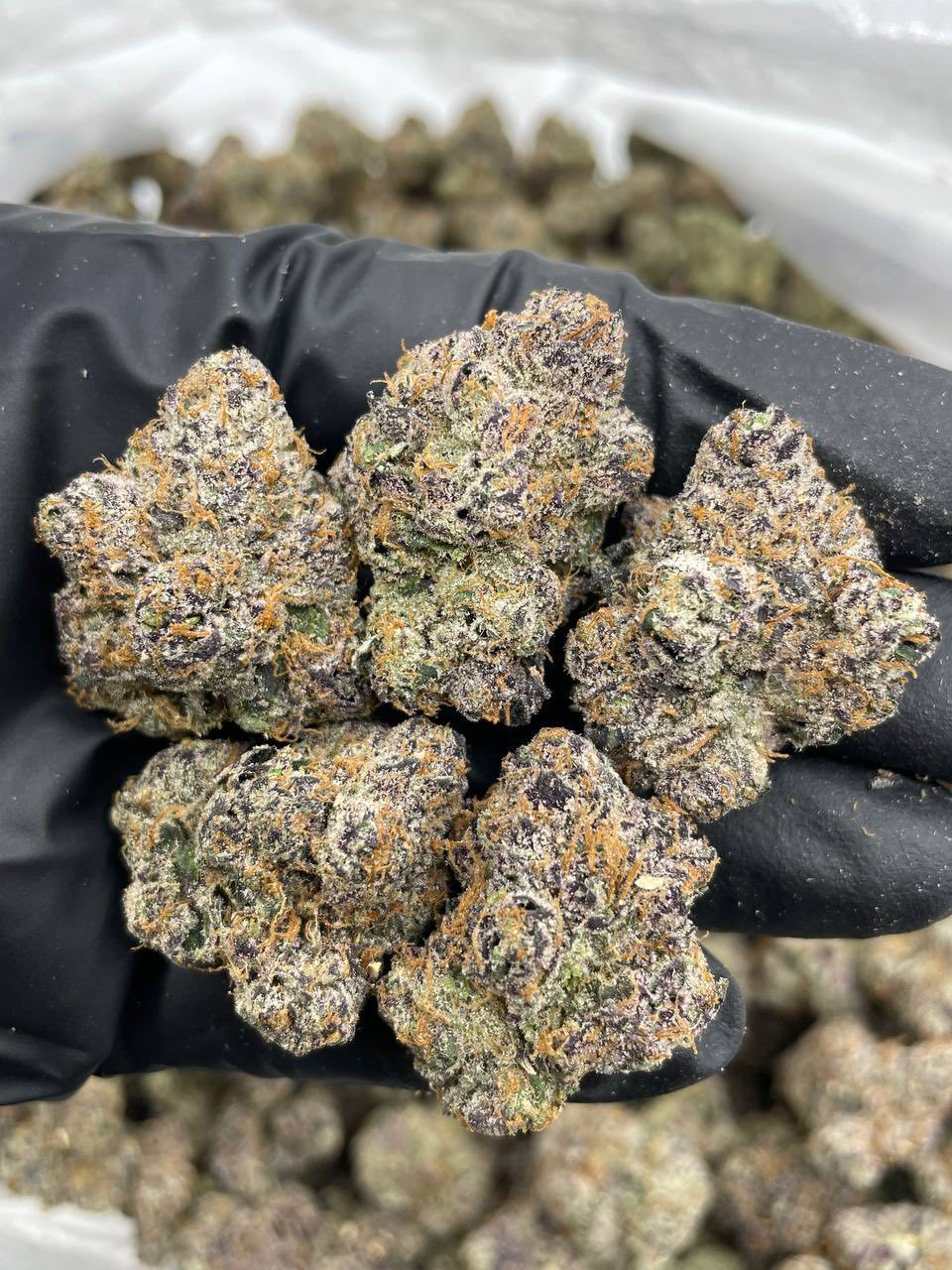
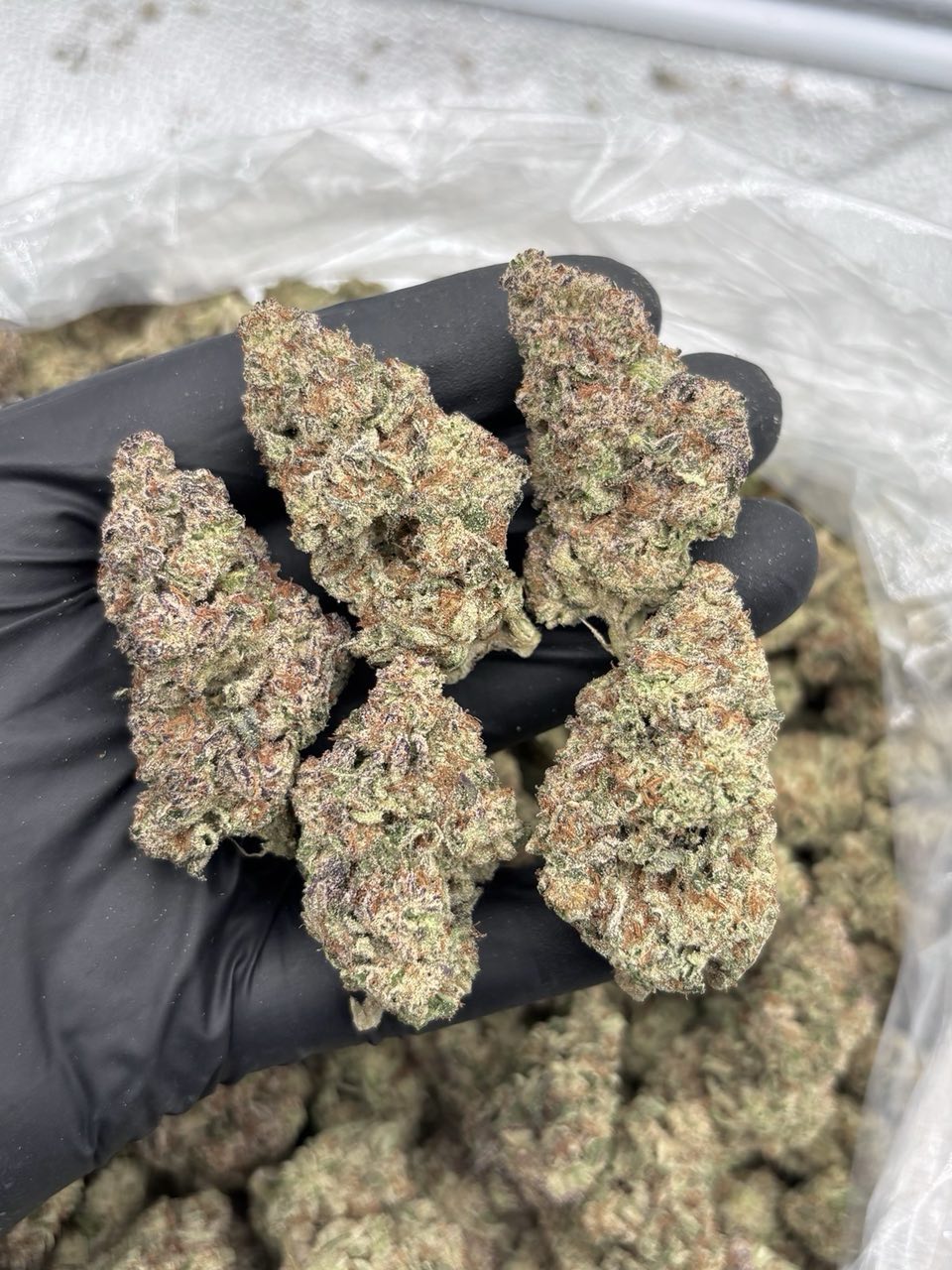
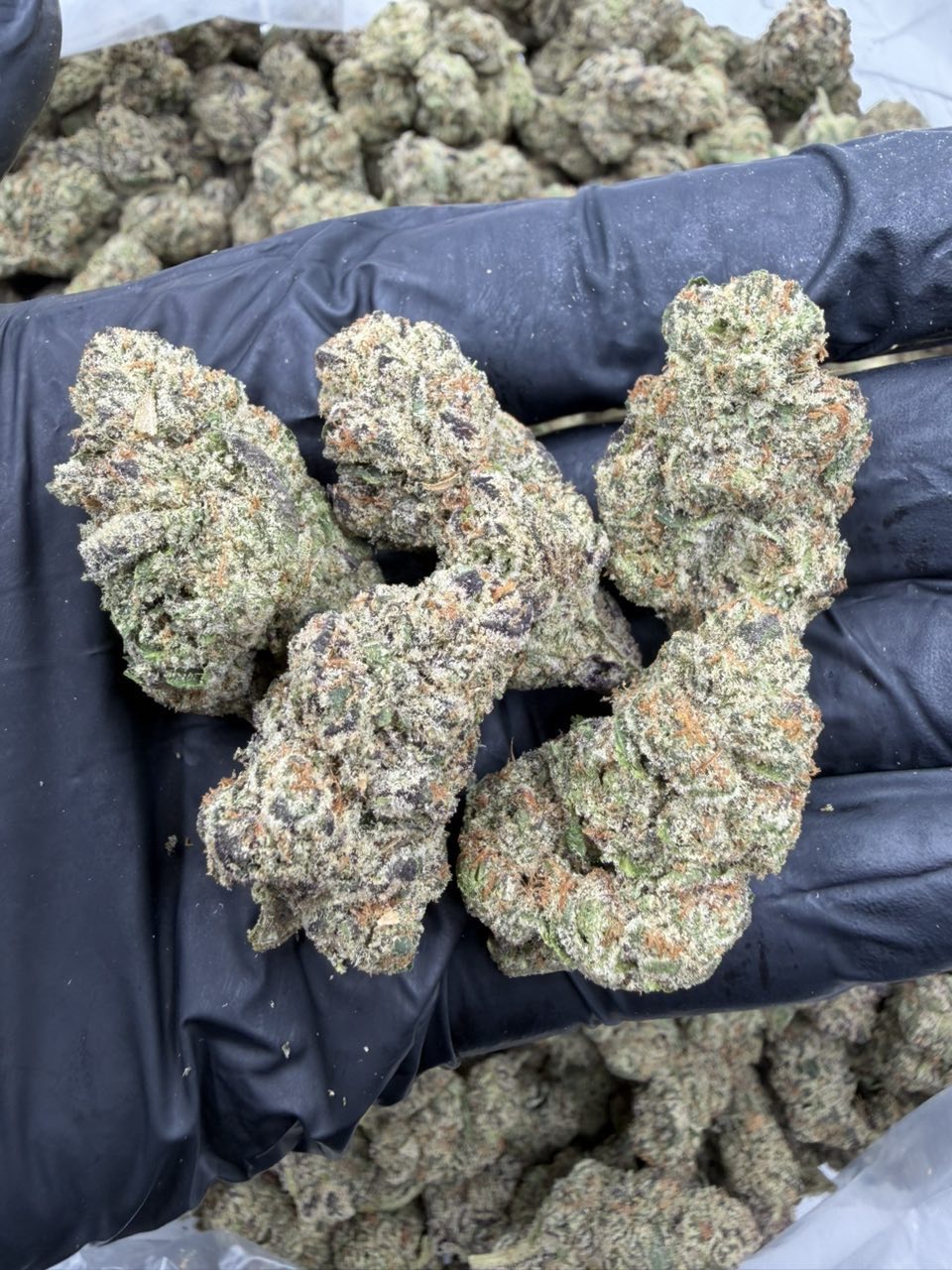
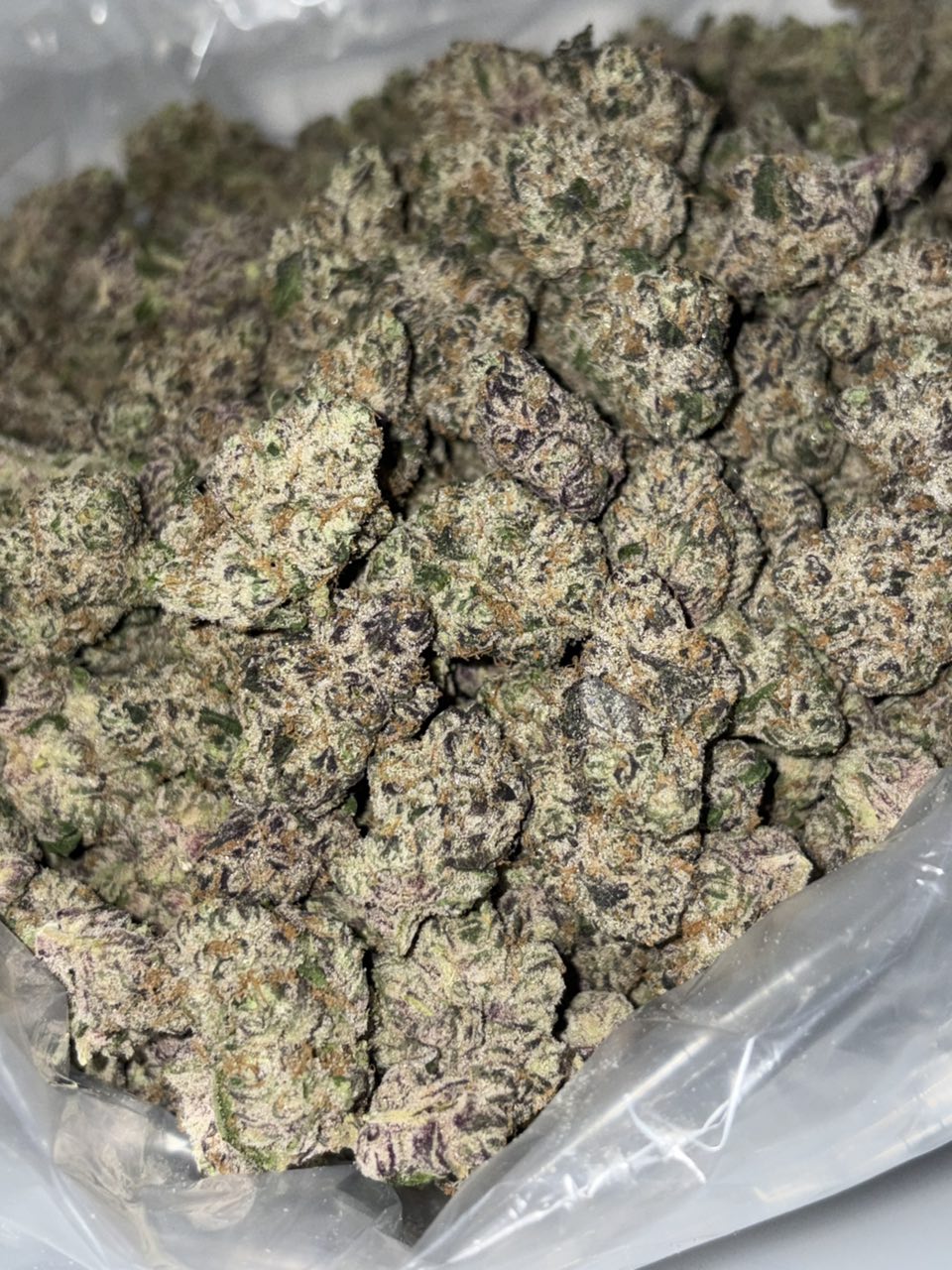
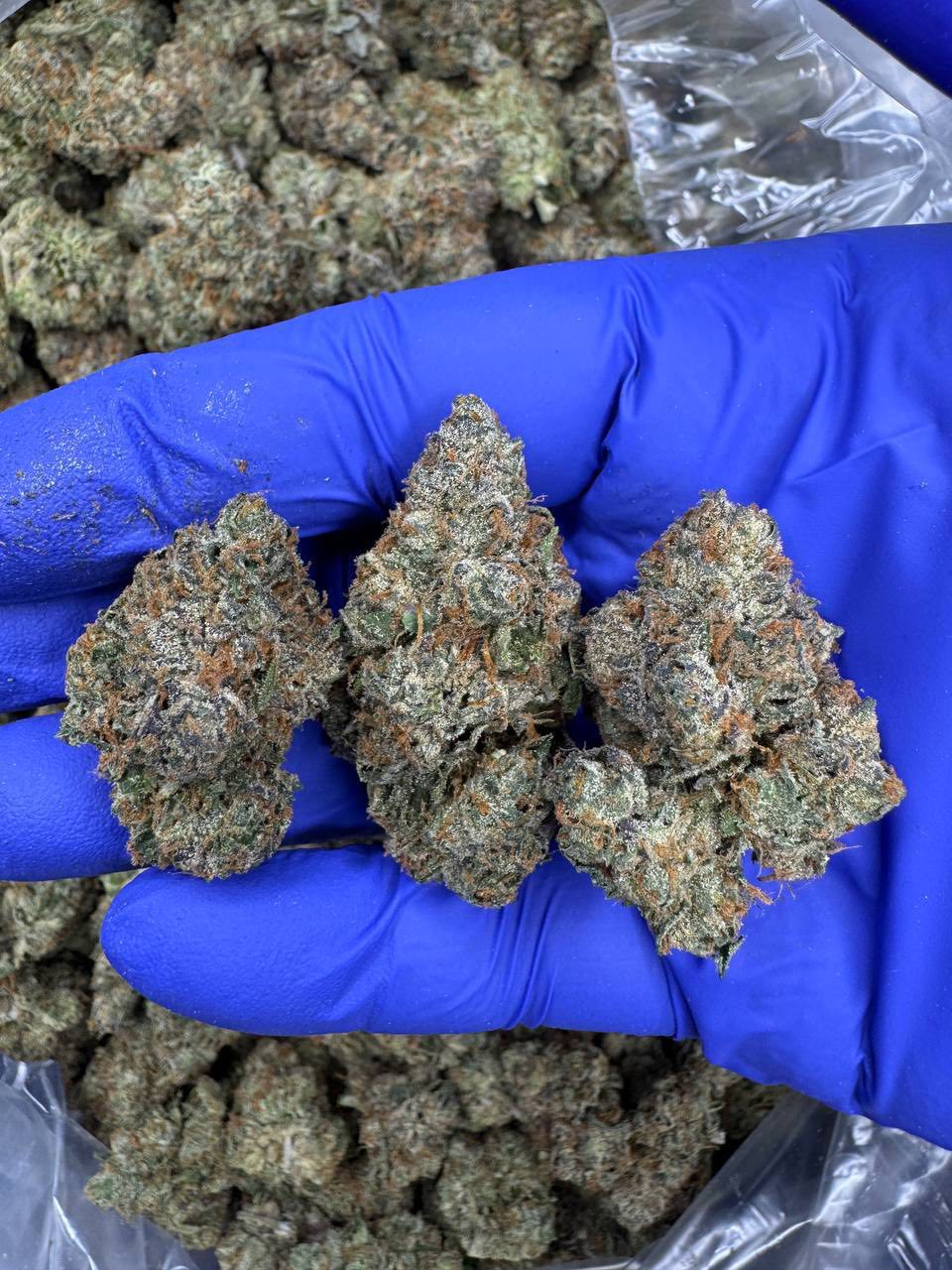
You don't need top-shelf flower for edibles — the high-temperature cooking destroys most of the terpene profile that justifies premium pricing. $70 Smalls is the cost-effective pick for batch cooking. Same THCa percentage as our top-shelf flower, fraction of the cost.
If you want flavor-rich edibles, our Top Shelf Fresh Drops catalog has the strain-specific terpene profiles that survive low-temperature cooking like raw infusions and short-baked recipes.
Related Reading
How Long Do THCa Edibles Last? — onset, peak, and duration math.
How to Dose THCa — broader dosing framework.
Strains for Beginners — what to start with if you're new.
THCa Flower vs Concentrate — when to pick which.
Disclaimer: This article is for adults 21+ in states where hemp-derived THCa is legal. Homemade edibles vary in potency batch-to-batch — start with smaller doses than you think you need. Label and store edibles where children, pets, and unwitting adults cannot access them. Cannabis affects individuals differently. Don't drive or operate machinery while under the effects of cannabis.
Keep reading & shop
Can You Fly With THC Flower? TSA Rules & the 2026 Travel Guide
Where to Buy THC Online in 2026 (And How to Pick a Store You Can Trust)
Shop: Shop THC gummies
Shop the read
What the writer recommends
6 hand-picked products
Further reading
Resources & References
Quick answers
Frequently asked
Yes. Decarboxylation (decarb) converts THCa into active Delta-9 THC by driving off a CO2 molecule with heat. Raw THCa is not psychoactive — you have to decarb the flower before infusing, or the edibles will not get you high. Standard protocol: 240°F for 40 minutes on a parchment-lined sheet pan.
60–120 minutes typically. Faster on an empty stomach, slower with a full meal. Fat-rich edibles (butter or oil-based) onset slower but hit harder than alcohol tinctures. Wait at least 90 minutes before re-dosing — the #1 mistake is taking a second dose because the first 'isn't working yet.'
Multiply grams of flower × THCa percentage × 1000 × 0.877 (decarb conversion factor) × 0.70 (typical extraction efficiency) = total mg of usable THC in the batch. Divide by the number of finished servings to get mg per serving. We walk through the full formula with examples below.
Some of it, with diminished effects. After a 2–4 hour butter or oil infusion, 60–80% of the cannabinoids are in the fat. The leftover 'spent' plant material can still be added to brownies or chocolate for a mild secondary effect, but most cooks discard it.
Coconut oil is more versatile — higher saturated fat content (which holds more cannabinoid), shelf-stable, and works in baked goods, raw recipes, gummies, and capsules. Butter has better flavor for traditional baking. Pick based on the recipe you're making.
Keep reading
More from the editorial
Articles in How To and across the WHAM Read.
 How To4 min
Bulk THC Disposables & Gummies: The Wholesale Guide
Disposables and gummies are the units side of wholesale: priced per piece against a case minimum rather than by weight. They don't degrade like flower, they reorder predictably, and they suit buyers without the footfall to turn a pound. Here's how the model works.
 How To5 min
Wholesale THC for Smoke Shops: What to Stock
Stocking hemp-derived THC in a smoke shop comes down to three decisions: which categories turn over fastest, what margin each carries, and what paperwork keeps you compliant. This guide covers the mix that works, the shelf-life risk on flower, and the documents to keep on file.
 How To4 min
How to Buy THC Wholesale: A Buyer's Walkthrough
Buying THC wholesale means volume tiers instead of unit prices, minimum order quantities, and paperwork retail buyers never see. This walkthrough covers how tiers work, what MOQs to expect on flower versus units, which lab documents to demand, and how to place a first order without overcommitting.

Get 5% off + the best reads in your inbox
Join 50,000+ subscribers. One short editorial email a week — unsubscribe any time.
No spam · unsubscribe in one click