
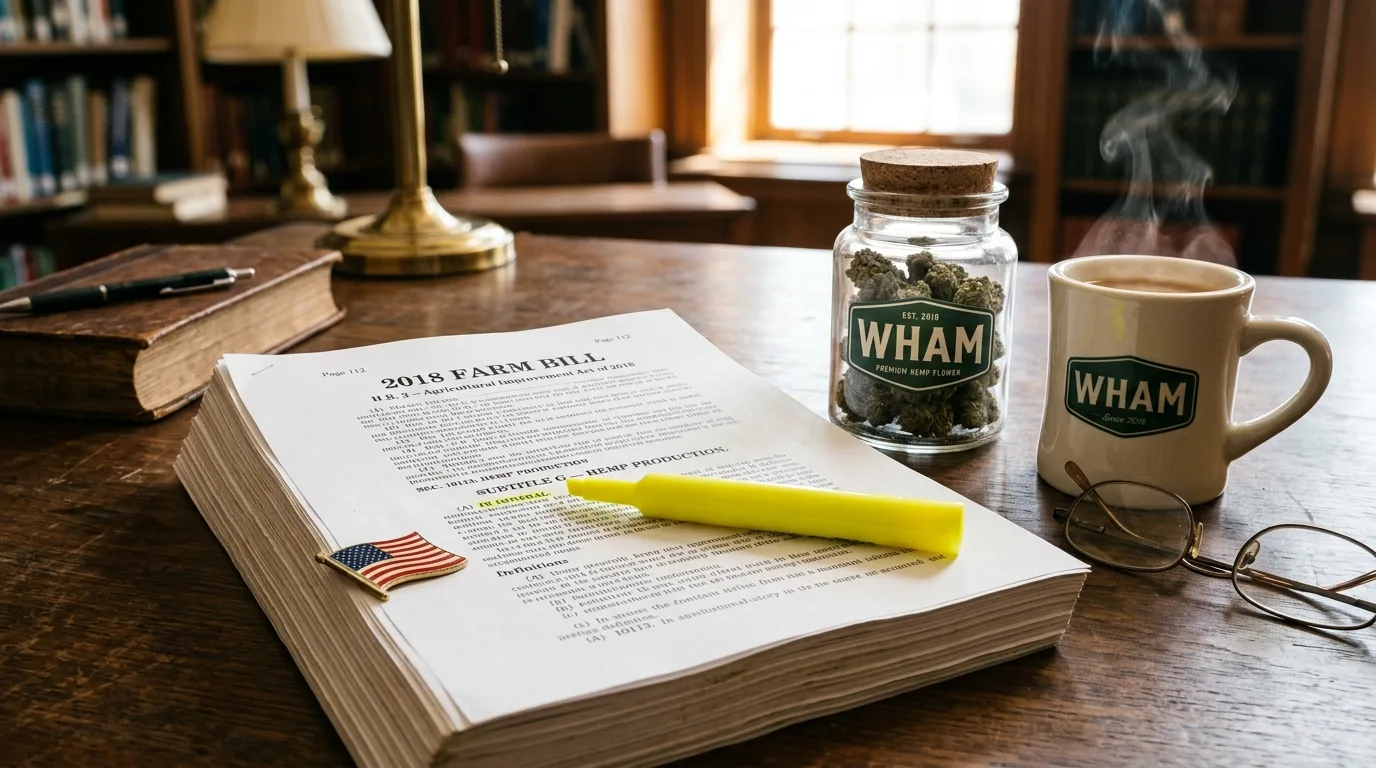
The 2018 Farm Bill Explained: How One Page of Federal Law Made THC Legal
A short paragraph in a 2018 agricultural bill quietly created the largest legal cannabis flower market in US history. Here's the legal story — written for buyers who want to understand why their orders are protected by federal law.
Most laws that change American daily life are headline-makers. The 2018 Farm Bill wasn't one of them. It was a thousand-page agricultural reauthorization — crop insurance, conservation programs, food stamps, dairy support — that passed both chambers of Congress with bipartisan supermajorities and was signed into law by President Trump on December 20, 2018.
Buried inside, on what was largely page 489, was a paragraph redefining one specific term: 'hemp.' That paragraph — eight lines long — turned out to be the most consequential cannabis-policy change in 80 years. Today, in 2026, it's the federal legal foundation for a multi-billion-dollar national flower market and the legal basis for everything sold on this site.
This article tells the story of how that happened, what the law actually says, and what it means for you as a buyer.
The Pre-2018 World: Hemp Was Schedule I
From the Controlled Substances Act of 1970 until December 2018, there was no federal legal distinction between hemp and marijuana. Both were 'Cannabis sativa' and both were Schedule I controlled substances. The fact that industrial hemp had no psychoactive effect didn't matter — it was banned.
Hemp had been federally legal in the United States for most of the country's history. Founding-era farmers grew it for rope and textiles. The Marijuana Tax Act of 1937 effectively banned it; the 1970 Controlled Substances Act formalized that ban. For 48 years, you could not legally grow hemp in the United States — not for fiber, not for seed, not for CBD, not for anything.
The 2014 Farm Bill cracked the door open. It allowed limited 'hemp pilot programs' in states that authorized them. The 2018 Farm Bill kicked the door down.
The 2018 Definition: Federal Statute, Verbatim
The actual federal definition of hemp lives in 7 U.S. Code § 1639o, which the 2018 Farm Bill amended. The text reads:
The term 'hemp' means the plant Cannabis sativa L. and any part of that plant, including the seeds thereof and all derivatives, extracts, cannabinoids, isomers, acids, salts, and salts of isomers, whether growing or not, with a delta-9 tetrahydrocannabinol concentration of not more than 0.3 percent on a dry weight basis.
Three things in that definition matter enormously for THCa:
'Any part of that plant…' explicitly includes derivatives, extracts, cannabinoids, isomers, acids, salts'. This was meant to cover CBD products, but the inclusion of 'acids' became important — THCa is, chemically, the acidic form.
'Delta-9 tetrahydrocannabinol concentration… not more than 0.3 percent.' This is the specific compliance threshold. The measurement is Delta-9 THC, not total THC, not THCa, not any other cannabinoid. A plant high in THCa but low in Delta-9 THC fits the federal definition.
'On a dry weight basis.' Concentration is measured in the raw plant material, not after combustion or decarboxylation. Heat is what converts THCa to Delta-9 THC. Before heat, THCa flower has almost no Delta-9 THC. After heat, it does — but the law only measures the pre-heat state.
Read those three together and the THCa market becomes obvious in retrospect: a Cannabis sativa plant could be selectively bred to produce high THCa with low Delta-9 in raw form. It would qualify as hemp. And — crucially — it would still get smokers and vapers high, because once heated, it becomes Delta-9 THC anyway.
How the THCa Market Was Born
The cannabis-industry conversation around the new hemp definition started immediately in late 2018. Within 12 months:
CBD producers were the first beneficiaries — full-spectrum CBD products quickly went mainstream, sold at gas stations and CVS pharmacies.
Delta-8 THC emerged as the first 'intoxicating hemp' product — chemically synthesized from CBD, it produced a milder high and was technically legal under the new definition.
By 2021, hemp breeders had genetic stock for cultivars that tested high in THCa and low in Delta-9 — the first 'THCa hemp flower' products hit the market.
By 2023, THCa flower was being sold in more US states than state-licensed dispensary marijuana — because it could ship via USPS to anyone in any state where local law permitted.
The 2024-2025 Farm Bill reauthorization cycle saw concerted lobbying from state-licensed marijuana operators to close the THCa loophole. Despite multiple proposed amendments, the federal definition remained unchanged. The market continued to grow.
The Interstate Commerce Protection
Section 10114 of the Farm Bill explicitly bars states from interfering with interstate hemp transport. This is what makes USPS shipping of THCa flower legally protected across state lines, even into states with stricter local hemp rules. The text:
Nothing in this title or an amendment made by this title prohibits the interstate commerce of hemp (as defined in section 297A of the Agricultural Marketing Act of 1946…) or hemp products.
In plain English: if a hemp product is federally compliant (less than 0.3% Delta-9 THC), no state can stop it from passing through. Some states still restrict possession and sale within their borders — that's a separate matter — but interstate transport is federally protected. This is why your THCa shipment can pass through Idaho on the way to Nevada without legal risk to the shipper.
The DEA's Position
The DEA's authority is limited by the Farm Bill's explicit removal of hemp from the Controlled Substances Act. The agency has issued guidance publicly clarifying their interpretation:
Hemp, as defined by the 2018 Farm Bill, is not a controlled substance.
Raw THCa-rich plant material that tests under 0.3% Delta-9 THC qualifies as hemp.
The DEA does not have unilateral authority to reclassify substances Congress has explicitly defined.
The agency has, at times, pushed back on specific products at the margins (synthetic Delta-9 from hemp, certain processing methods), but raw THCa flower has remained on the protected side of the line.
State-Level Pushback
Federal preemption only goes so far. States retain authority to regulate cannabis products within their borders. Several states have closed the THCa loophole locally:
'Total THC' state laws measure post-decarboxylation THC content, effectively counting THCa as Delta-9 THC. Idaho, Oregon, and Utah have adopted variants of this approach.
Smokable hemp bans prohibit hemp in flower or smokable form regardless of cannabinoid content. Rhode Island and a few others have used this approach.
Intoxicating hemp restrictions place high-THCa products under state marijuana regulatory regimes. Minnesota and a few others have integrated hemp-derived products into existing cannabis programs.
We track current state status in our 50-state legality guide. Always verify your state before ordering.
What This Means for You as a Buyer
From a buyer's standpoint, the key takeaways:
Federal law protects you. Hemp-derived THCa is federally legal in raw plant form. Reputable retailers (us included) ship federally-compliant product with full lab documentation.
State law might restrict you. About 5-10 states have closed the THCa loophole locally. Check before you order.
Drug tests don't care about federal legality. Once decarboxylated and metabolized, THCa is Delta-9 THC from a urine test's perspective. See our complete drug test guide for detection windows.
Lab tests are your verification. Every legitimate THCa product comes with a Certificate of Analysis confirming Delta-9 compliance. We publish all of ours at our Lab Tests directory. Don't buy without one.
The political landscape can change. Each Farm Bill reauthorization brings debate over closing intoxicating hemp loopholes. The market is mature and well-lobbied, but federal policy can shift. Stock up while the law is favorable, but don't build your life around the assumption that today's loophole is permanent.
A Brief Timeline
1937: Marijuana Tax Act effectively bans hemp and marijuana.
1970: Controlled Substances Act formalizes Schedule I status for both.
2014: Farm Bill creates limited 'hemp pilot programs' in states that authorize them.
December 2018: Agriculture Improvement Act of 2018 (the 2018 Farm Bill) signed into law. Hemp permanently removed from Schedule I.
2019-2020: CBD and Delta-8 markets explode under the new definition.
2021-2022: First commercial THCa-rich hemp flower hits the market.
2023-2025: THCa flower becomes a multi-billion-dollar national category. State-level pushback intensifies. Farm Bill reauthorization debates continue without closing the federal loophole.
2026: Hemp-derived THCa flower available in most US states. Where you are today.
Where to Buy Federally Compliant THCa
Every WHAM product is lab-tested and certified to meet the federal Delta-9 THC limit. You can verify any batch by checking the COA linked on every product page or at our Lab Tests directory.
Start points for new buyers:
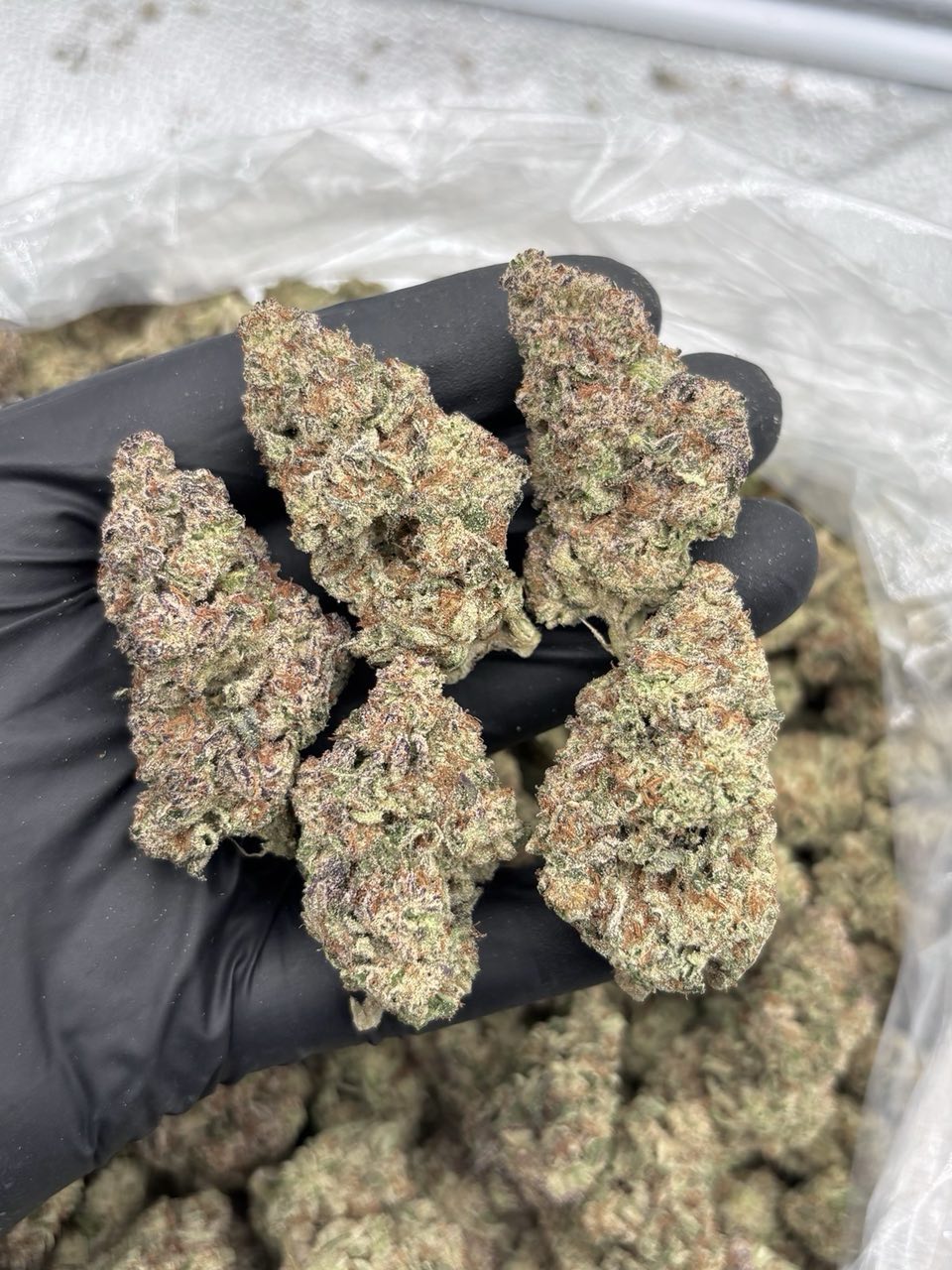
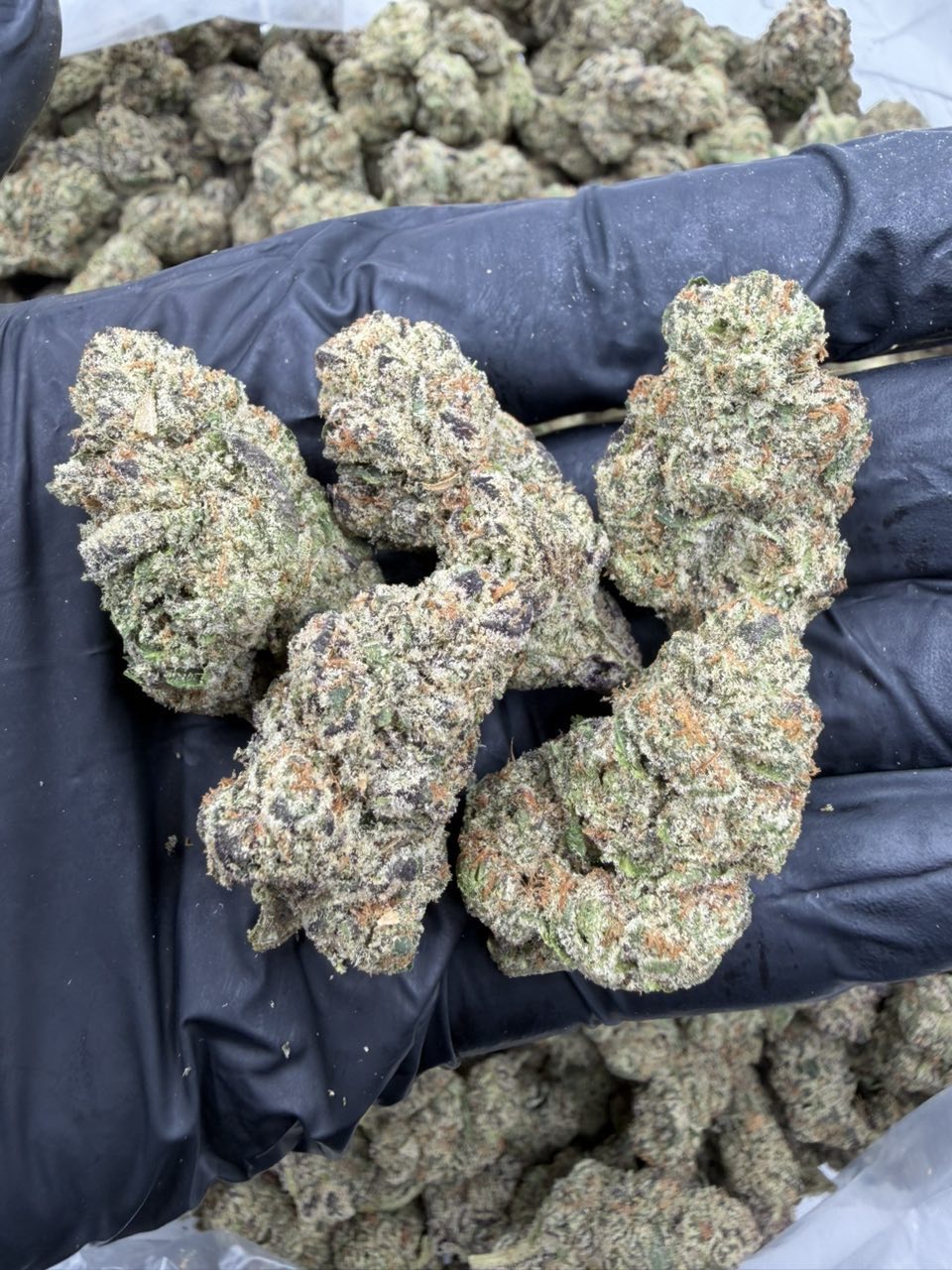
Top Shelf Fresh Drops — premium indoor hemp flower, all federally compliant.
$70 Smalls — same lab quality at the value tier.
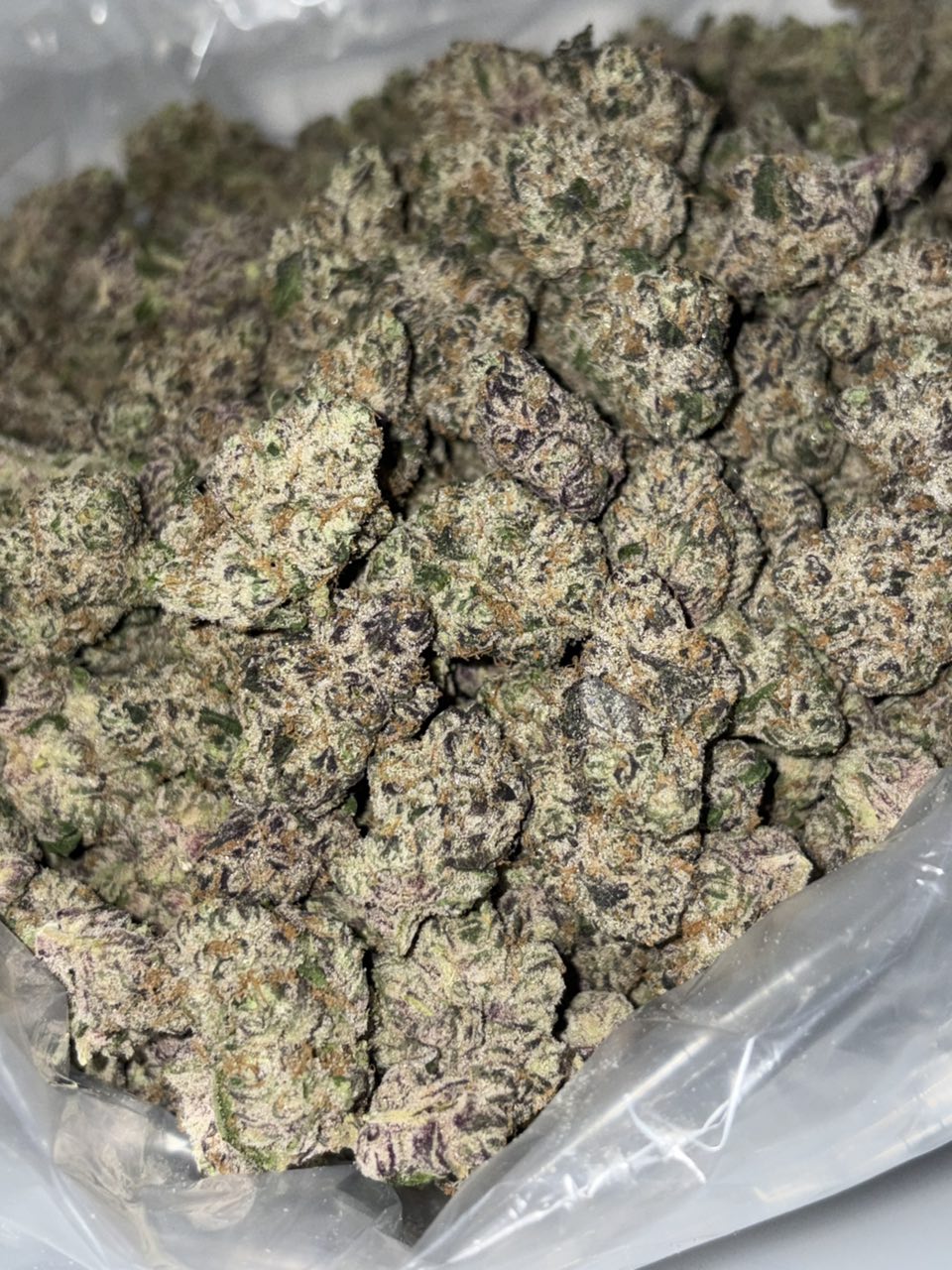
Bulk Pounds — wholesale-level pricing for serious buyers.
Disclaimer: This article is educational and not legal advice. Federal hemp law is settled at the federal level, but state laws vary and change. Always verify your state's current cannabis and hemp regulations before purchasing. WHAM products are sold to adults 21+ in states where hemp-derived products are legal.
Fresh for 2026 — a proposed federal change to how “total THC” is measured could reshape hemp-derived THCa rules later this year. Nothing has changed yet, but always confirm your state's current stance before ordering.
Keep reading & shop
Is THC Still Legal in 2026? The Hemp Farm Bill Ban, Explained
Is THC Legal in Your State? The Updated 50-State Guide for 2026
Shop: Shop THCa flower
What the writer recommends
6 hand-picked products
Further reading
Resources & References
Full Text: Agriculture Improvement Act of 2018 (Congress.gov)
congress.gov
7 U.S. Code § 1639o — Hemp Definition (Cornell Law)
law.cornell.edu
USDA — Hemp Production Information
ams.usda.gov
DEA — Hemp & Hemp Derivatives
dea.gov
Brookings — A History of the Farm Bill
brookings.edu
NORML — Federal Cannabis Law Tracker
norml.org
Quick answers
Frequently asked
It's the routine 5-year reauthorization of federal agricultural policy that became law in December 2018. Its formal name is the Agriculture Improvement Act of 2018. Among many other provisions, it permanently removed hemp from the Controlled Substances Act and legalized hemp production nationwide.
No. The Farm Bill drew a sharp legal line between hemp (Cannabis sativa with less than 0.3% Delta-9 THC by dry weight) and marijuana (everything above that threshold). Marijuana remains a Schedule I controlled substance under federal law. Hemp is fully legal.
The hemp definition measures Delta-9 THC content in the raw plant. THCa is a different molecule that only becomes Delta-9 THC when heated. Raw THCa flower can contain high THCa while still containing less than 0.3% Delta-9 THC — qualifying as hemp under the federal definition.
Each 5-year cycle brings debate over whether to close intoxicating hemp loopholes. As of 2026, the loophole remains open at the federal level, though several states have closed it locally. Industry analysts watch each Farm Bill reauthorization cycle closely. The 2024-2025 reauthorization debates continued without major changes to the hemp definition.
Only Congress can amend the Farm Bill's hemp definition. The DEA cannot unilaterally reclassify a substance that Congress has explicitly defined as hemp. The DEA has, however, signaled their interpretation of where the lines fall — and that interpretation has so far supported the legality of raw THCa.
Keep reading
More from the editorial
Articles in Education and across the WHAM Read.
 Education2 min
How Long Does a THC High Last? (2026 Timeline)
A smoked or vaped THC high usually peaks within 10 minutes and lasts about 1–3 hours; THC edibles run 4–8 hours. This guide breaks down how long a THC high lasts by method, what changes the duration, and how to come down faster if you need to.
 Education4 min
What Are WHAM Packs? Lil Baby Weed Packs, Sizes and Prices
A WHAM pack is a quarter pound to a full pound of Lil Baby's weed, mixed with some disposables and shipped in a double-sealed, nitrogen-sealed, smell-proof packet. Here are the sizes, how the pricing works, and how to order one.
Education4 minWhat Strain Is Lil Baby's Weed? The WHAM Strains Explained
Lil Baby's weed isn't a single strain — WHAM is his brand, with around 90 flower options on the menu. Most are hybrids, with indica picks like Alien ET and sativa picks like Sour Diesel. Here are the best sellers and how to pick one.

Get 5% off + the best reads in your inbox
Join 50,000+ subscribers. One short editorial email a week — unsubscribe any time.
No spam · unsubscribe in one click