
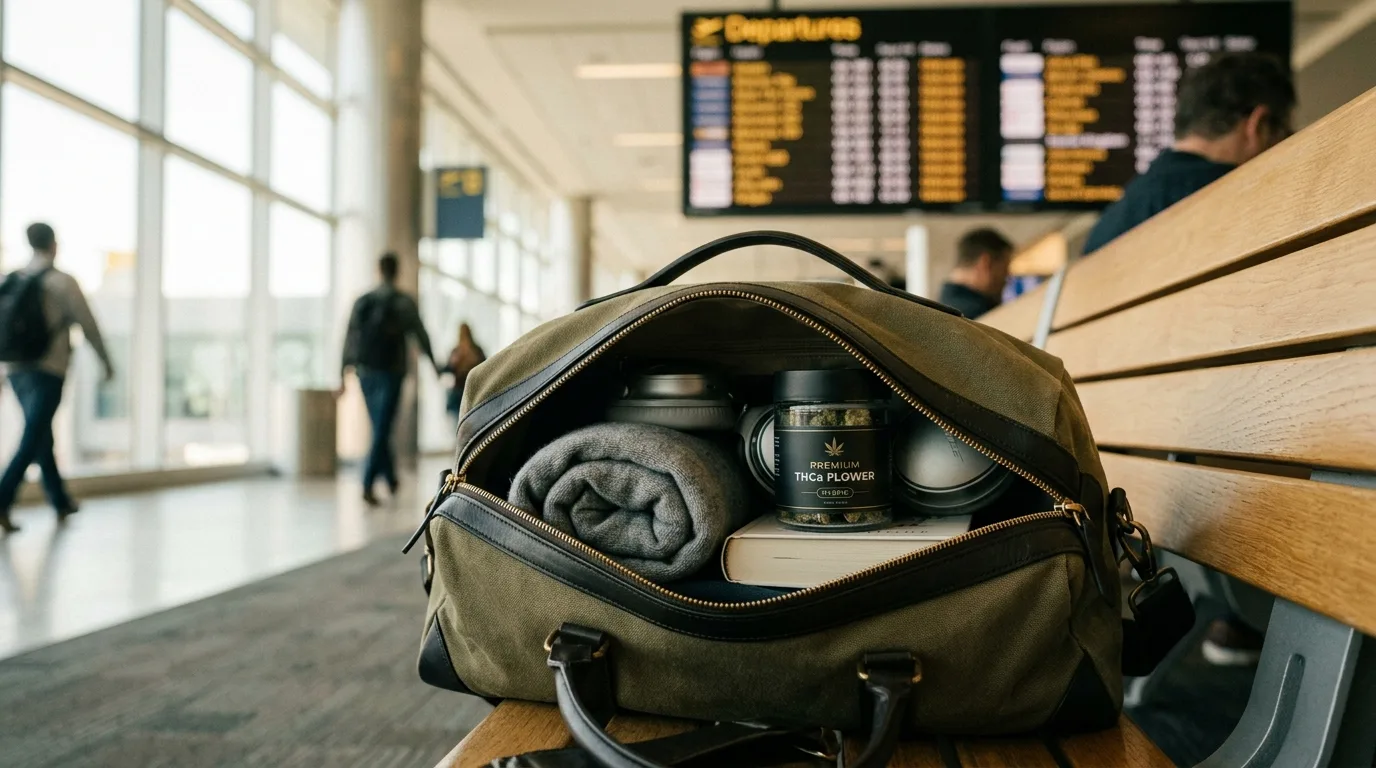
Can You Fly With THC Flower? TSA Rules & the 2026 Travel Guide
THCa flower is federally legal hemp — which puts it in a strange gray zone at the airport, where it looks, smells, and tests exactly like the thing that isn't. Here's how TSA actually handles hemp, what the law says, the paperwork that protects you, the state-line trap that catches travelers, and the honest risk breakdown before you pack a jar.
It's one of the most-searched questions in hemp, and for good reason: THCa flower is federally legal, but it looks like a sandwich bag of weed and smells even more like one. So what happens when you walk it through an airport security line? Can you actually fly with THCa flower — and should you?
The honest answer has two layers. Legally, compliant THCa flower is hemp, and TSA's mandate is aviation security — not drug enforcement. Practically, you're carrying something visually indistinguishable from marijuana into a setting where a screener's judgment, your paperwork, and the laws of the state you land in all collide. This guide breaks down what's actually allowed, how TSA really operates, the paperwork that protects you, and a clear-eyed look at the risk so you can make your own call.
The Short Answer
Federally legal hemp can be flown with. THCa flower is federally legal hemp. But 'legal' and 'risk-free' are not the same sentence — and at 30,000 feet that gap is the whole story.
If you want the one-line version: yes, you generally can, because hemp under 0.3% delta-9 THC is legal and TSA isn't in the cannabis-enforcement business. But flower is the highest-risk form to travel with, your destination's state law still applies on the ground, and nothing replaces carrying proof that what you've got is hemp. Read on for the details that actually keep you out of trouble.
What TSA Actually Does (and Doesn't Do)
TSA is a federal agency, and its screeners are looking for one category of thing: threats to the aircraft — weapons, explosives, prohibited items. They are not narcotics officers, they do not carry potency-testing equipment, and they do not field-test flower to measure THCA versus delta-9 THC.
TSA's own published guidance on hemp and cannabis comes down to a few points:
Hemp-derived products under the federal limit are generally allowed. Products made with federally legal hemp can fly.
Screening is for security, not drugs. TSA doesn't search bags hunting for cannabis; they're scanning for security threats.
Discoveries can be referred to local police. If a screener happens to find what looks like marijuana, policy is to refer it to local law enforcement — and then state law takes over.
That last point is the hinge. TSA won't adjudicate whether your jar is hemp or marijuana — they'll hand the question to local authorities, who answer it under their state's law. Which is exactly why where you're flying matters as much as what you're carrying.
The Real Trap: State Lines, Not Federal Law
Federal law is the easy part. The hard part is that air travel crosses state borders, and THCa's legal status still varies by state. You might take off from a state where THCa is unambiguously legal and land in one that restricts intoxicating hemp — and a local officer at the arrival airport applies the arrival state's rules.
Before any trip, check both ends. Our state-by-state THCa legality guide covers where it stands today, and our explainer on the 2026 hemp law changes covers why that map is shifting. If either your origin or destination restricts THCa, the smart move is to not fly with it on that route.
How to Fly With THCa Flower the Smart Way
If you've checked your route and decided to travel with it, these steps stack the odds in your favor:
Keep it in original, sealed, labeled packaging. A branded jar or pouch that clearly says hemp / THCa, with batch info, looks like a regulated product — not a baggie. Loose flower in an unmarked bag is the worst-case presentation.
Carry the Certificate of Analysis. The COA is your evidence the product is under 0.3% delta-9 THC. Save an offline copy and keep the QR-coded label with the product. This single document is the difference between 'legal hemp' and 'unidentified cannabis.'
Choose carry-on over checked. You stay with the product, you can answer questions in the moment, and there's no unattended checked-bag search. Observe normal carry-on rules for any liquids or accessories.
Keep the amount personal-use small. A small jar reads as personal use. A large quantity reads as distribution to anyone who finds it — a completely different and far worse conversation.
Be calm and honest if asked. It's legal hemp; treat it that way. "It's hemp-derived THCa, here's the lab report" is a confident, accurate answer. Nervous evasion invites exactly the scrutiny you don't want.
What About Vapes, Edibles, and Pre-Rolls?
Form factor changes the calculus. Vapes and disposables must go in carry-on — lithium batteries are prohibited in checked luggage by airline safety rules — and a clearly labeled hemp vape is generally less eyebrow-raising than raw flower. Edibles and gummies in sealed, labeled retail packaging are typically the most discreet option, since they don't carry the unmistakable smell of flower. Pre-rolls carry the same smell-and-sight risk as flower. As a rule of thumb, the more a product looks like an ordinary labeled consumer good and the less it smells like cannabis, the smoother the checkpoint tends to go.
The Honest Risk Assessment
We're not going to pretend this is zero-risk, because it isn't. Here's the straight version:
Lowest risk: don't fly with any cannabis product. Buy compliant THCa at your legal destination instead.
Low–moderate risk: sealed, labeled edibles or a labeled hemp vape in carry-on, on a route legal at both ends, COA in hand.
Higher risk: raw flower or pre-rolls — the forms most easily mistaken for marijuana by smell and sight.
Highest risk: any of the above flown into a state that restricts THCa, with no packaging and no lab report.
International travel is a hard line: never fly internationally with any THCa or cannabis product. Many countries impose severe penalties regardless of U.S. hemp law, and your COA means nothing at a foreign border. Keep all of this domestic, and only on routes legal at both ends.
The Bottom Line
Can you fly with THCa flower? Federally, yes — it's legal hemp and TSA isn't hunting for it. Should you? That depends on your route, your paperwork, and your appetite for a gray-zone gamble. Travel a legal-at-both-ends route, carry sealed packaging and a COA, keep it carry-on and small, and you've done everything reasonable. Want true peace of mind? Leave it home and pick it up where you land. Both are valid — just go in knowing which trade-off you're making.
Related Reading
Is THCa Legal in Your State? 2026 Guide — check both ends of your trip before you pack.
Is THCa Still Legal in 2026? The New Federal Hemp Law, Explained — why the legal map is shifting under your feet.
How to Store THCa Flower — keep it fresh and sealed, on the road or at home.
How to Spot High-Quality THCa Flower — reading the COA you'll be carrying.
Disclaimer: This article is general information, not legal advice. Air travel with hemp products carries inherent legal risk that varies by state, airport, and circumstance. Laws change frequently. Confirm the current rules for your origin and destination, never travel internationally with cannabis products, and consult a qualified attorney for legal questions. WHAM products are for adults 21+ in states where hemp-derived THCa is legal.
Keep reading & shop
Can You Travel With THC Flower? (Flying, Driving & Shipping)
The Best Humidity for THC Storage (And How to Keep It There)
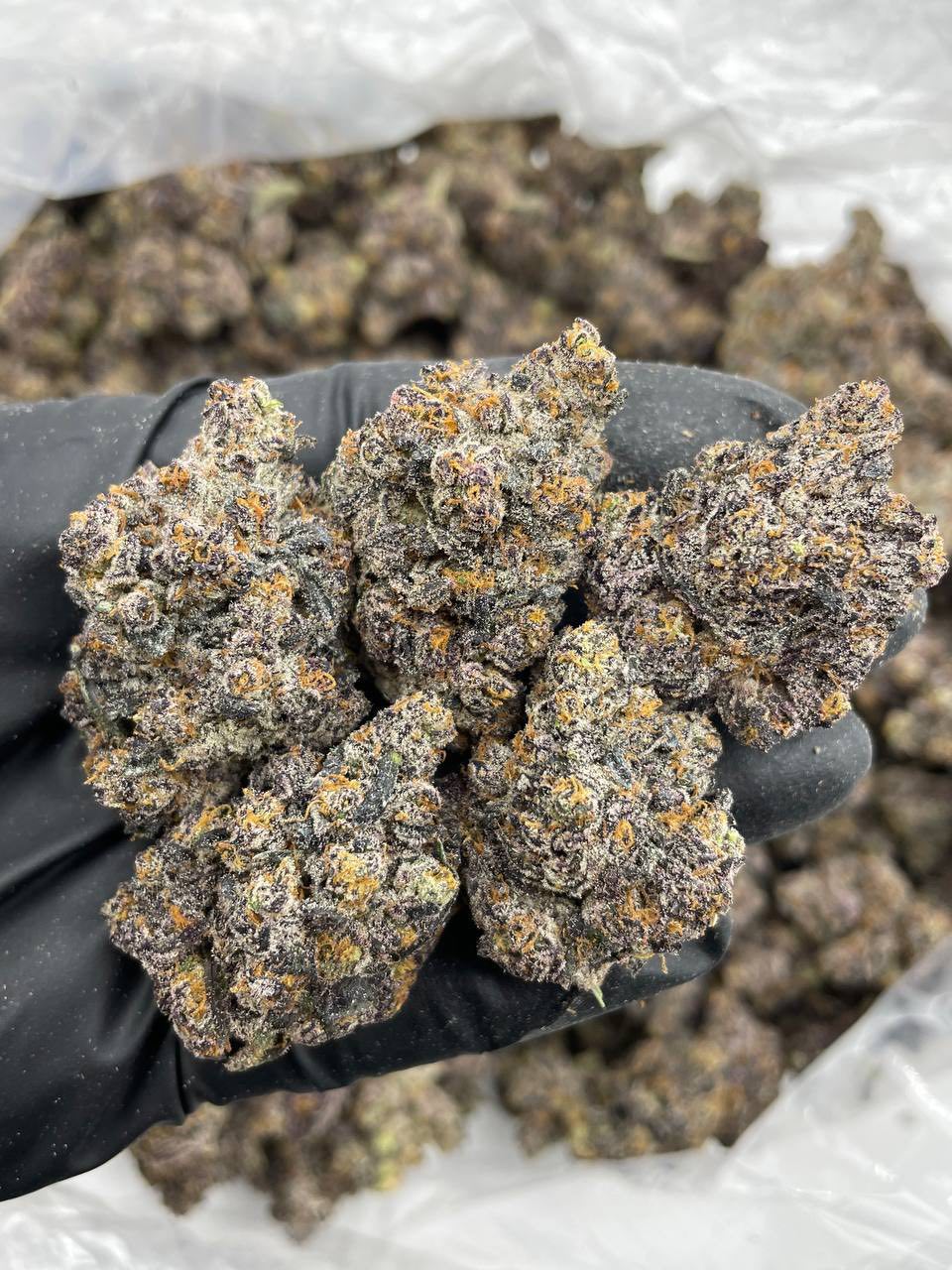
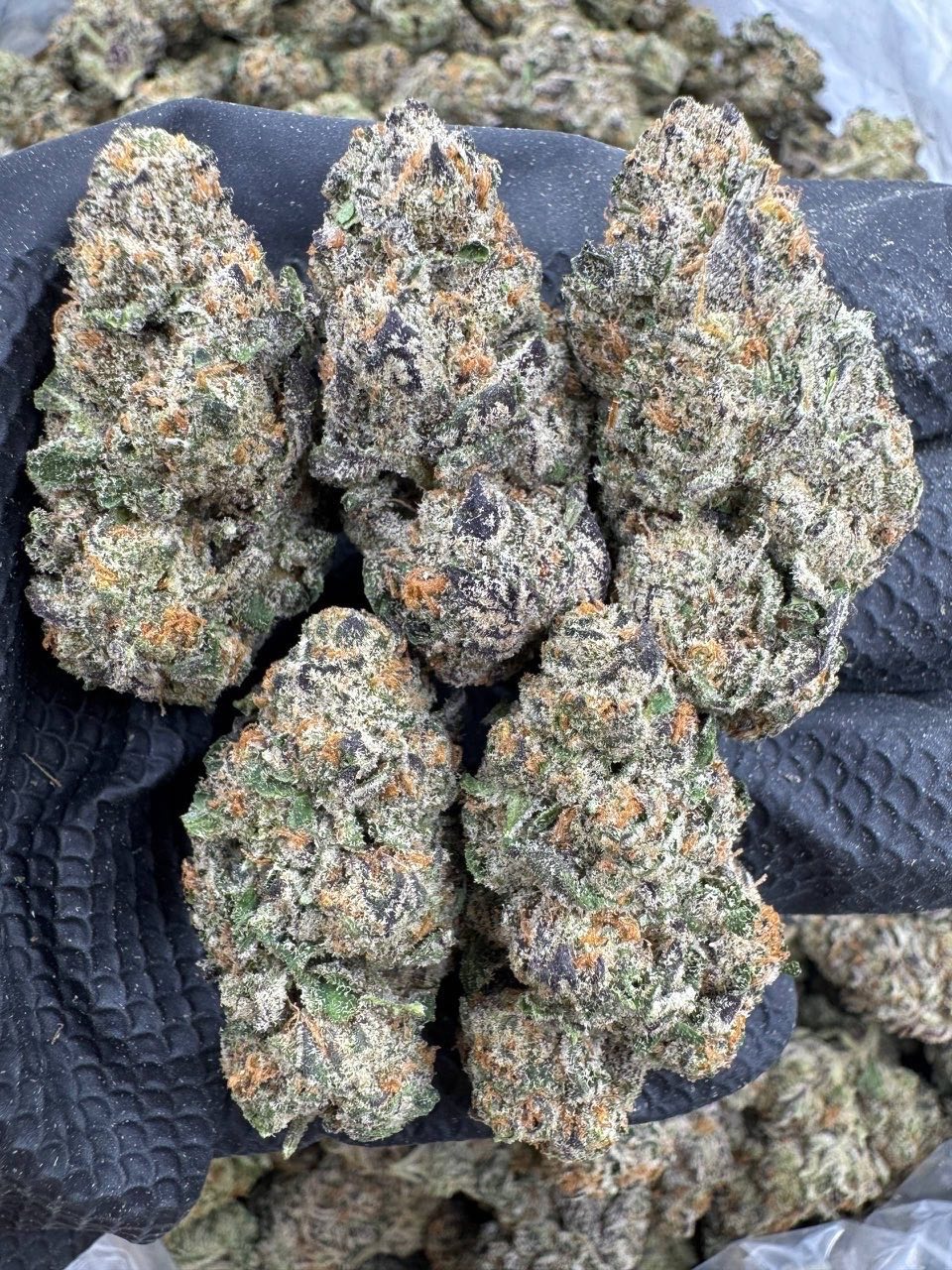
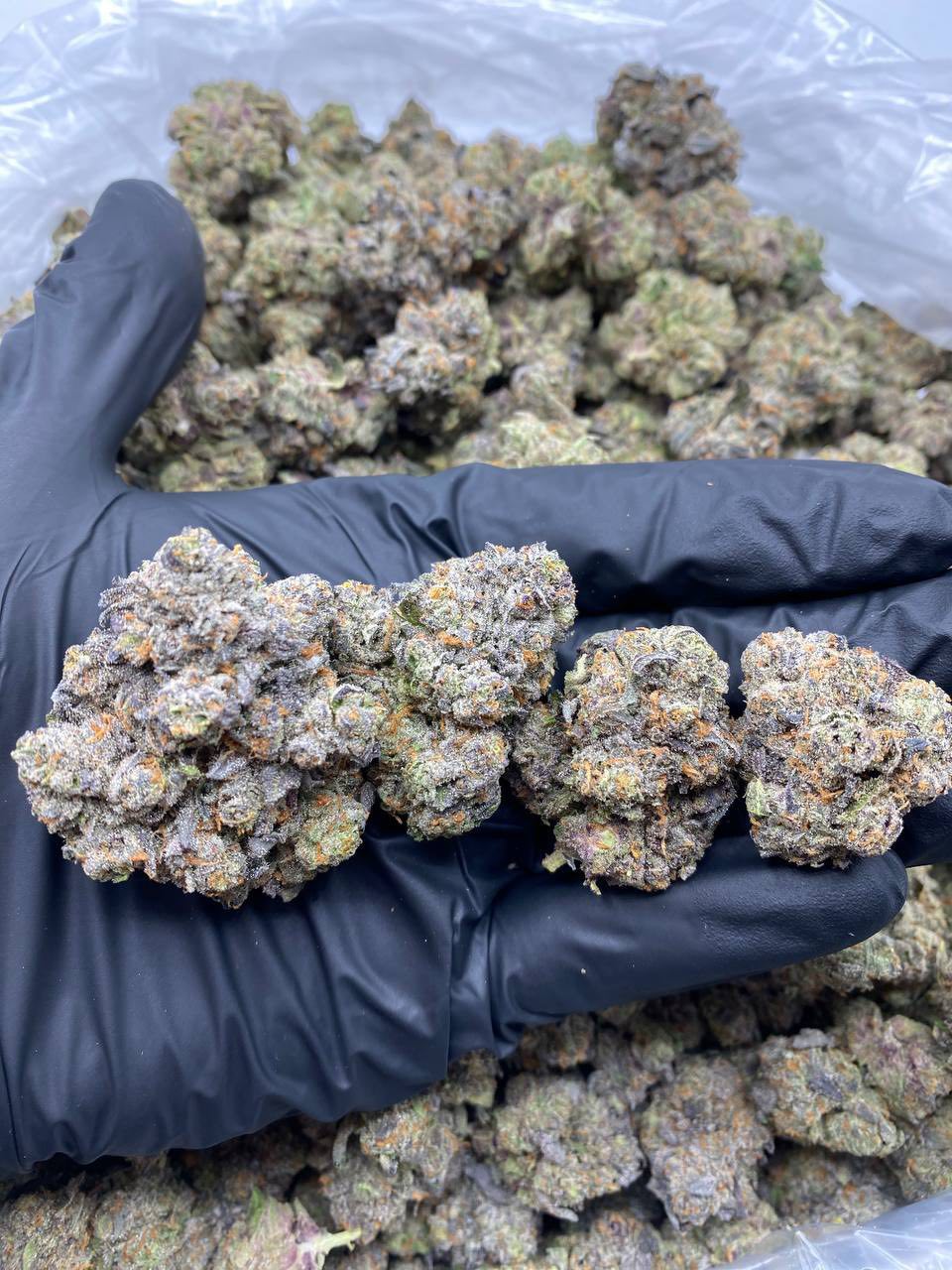
Shop: Shop THCa flower
Shop the read
What the writer recommends
5 hand-picked products
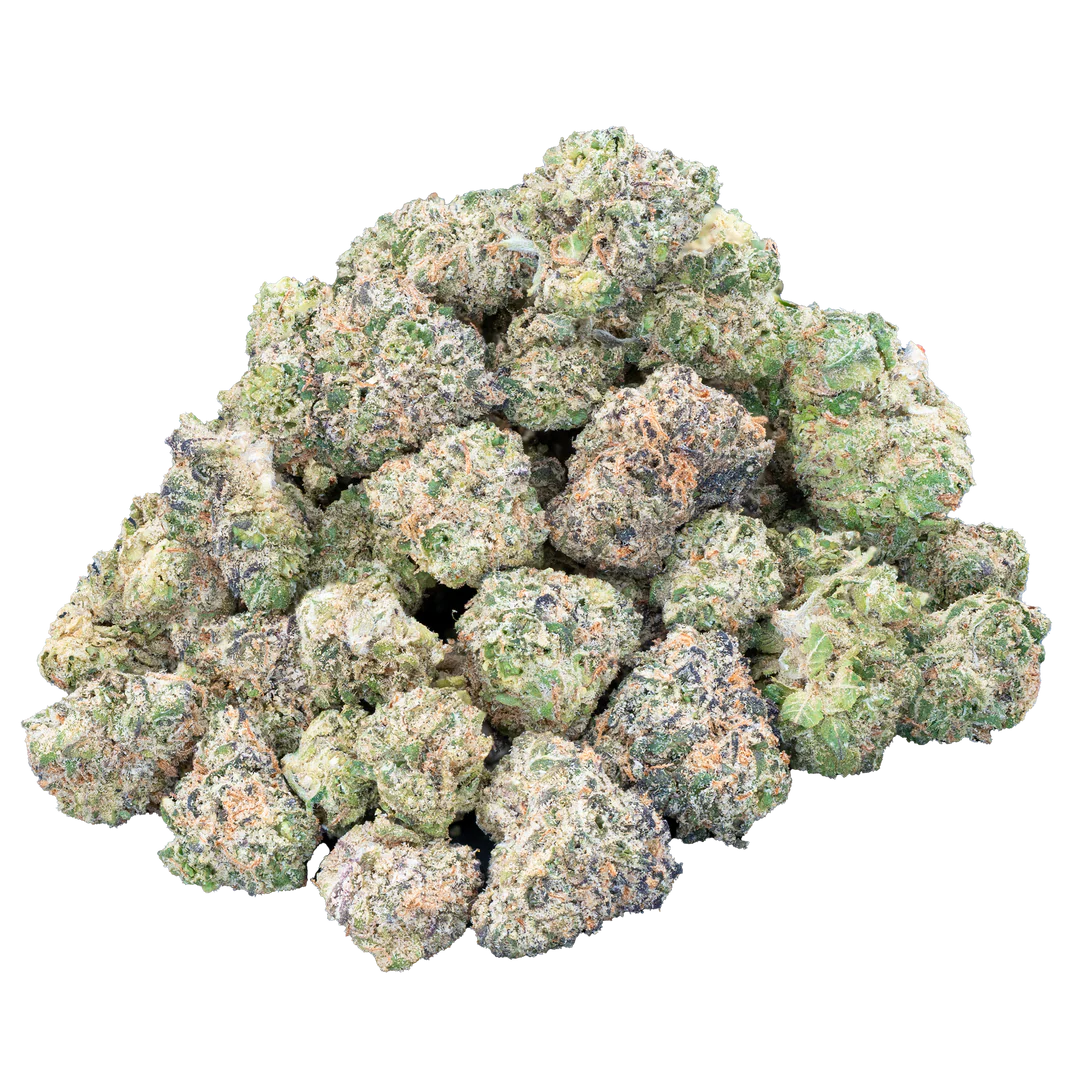
Further reading
Resources & References
Quick answers
Frequently asked
Federally, hemp-derived THCa flower that tests under 0.3% delta-9 THC by dry weight is legal hemp, and TSA's job is federal security screening, not state drug enforcement. TSA has stated that products containing hemp-derived compounds under the federal limit are generally allowed. The complication isn't federal law — it's that THCa flower is visually identical to marijuana, and you land in a state whose own laws may treat it differently. It is allowed in principle, but it is never zero-risk.
No. TSA screeners are looking for threats to aviation security, not running cannabinoid potency tests. They don't carry equipment to distinguish THCa hemp from marijuana, and they don't field-test flower. Their published policy is that if they happen to discover what appears to be cannabis during screening, they may refer it to local law enforcement — and from there it becomes a question of state and local law, not TSA's.
Carry-on is generally the better choice. You keep the product with you, you can present your Certificate of Analysis and original sealed packaging if asked, and there's no separate checked-bag search you're absent for. Keep it sealed in its original labeled packaging, keep the COA with it, and keep quantities personal-use small. Never travel with more than a small personal amount.
Carry the product in its original, labeled, sealed packaging and bring the Certificate of Analysis (COA) — the third-party lab report showing it's under 0.3% delta-9 THC. A QR code on the label that links to the COA is good; a printed or saved-offline copy is better. The label and lab report together are what let you demonstrate the product is legal hemp rather than marijuana if anyone asks.
Honestly, yes — the lowest-risk option is always to not travel with any cannabis product. Flower carries the most risk because it's the form most easily mistaken for marijuana by smell and sight. If you don't want any uncertainty, leave it home and buy compliant THCa at your destination where it's legal, or choose a more discreet, clearly-labeled product format. Only you can weigh the convenience against the gray-zone risk.
Keep reading
More from the editorial
Articles in How To and across the WHAM Read.
 How To4 min
Bulk THC Disposables & Gummies: The Wholesale Guide
Disposables and gummies are the units side of wholesale: priced per piece against a case minimum rather than by weight. They don't degrade like flower, they reorder predictably, and they suit buyers without the footfall to turn a pound. Here's how the model works.
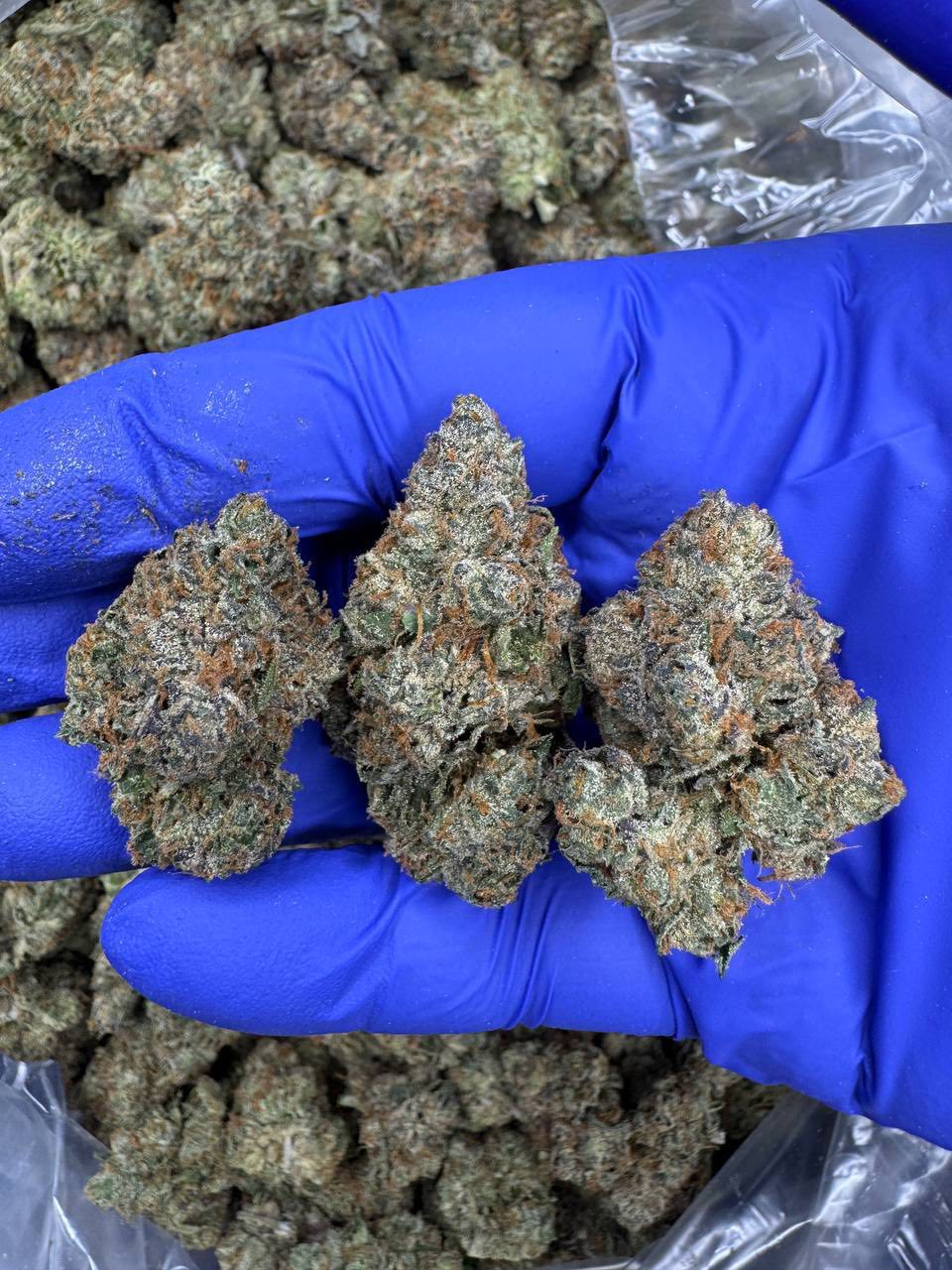 How To5 min
Wholesale THC for Smoke Shops: What to Stock
Stocking hemp-derived THC in a smoke shop comes down to three decisions: which categories turn over fastest, what margin each carries, and what paperwork keeps you compliant. This guide covers the mix that works, the shelf-life risk on flower, and the documents to keep on file.
 How To4 min
How to Buy THC Wholesale: A Buyer's Walkthrough
Buying THC wholesale means volume tiers instead of unit prices, minimum order quantities, and paperwork retail buyers never see. This walkthrough covers how tiers work, what MOQs to expect on flower versus units, which lab documents to demand, and how to place a first order without overcommitting.
Get 5% off + the best reads in your inbox
Join 50,000+ subscribers. One short editorial email a week — unsubscribe any time.
No spam · unsubscribe in one click