
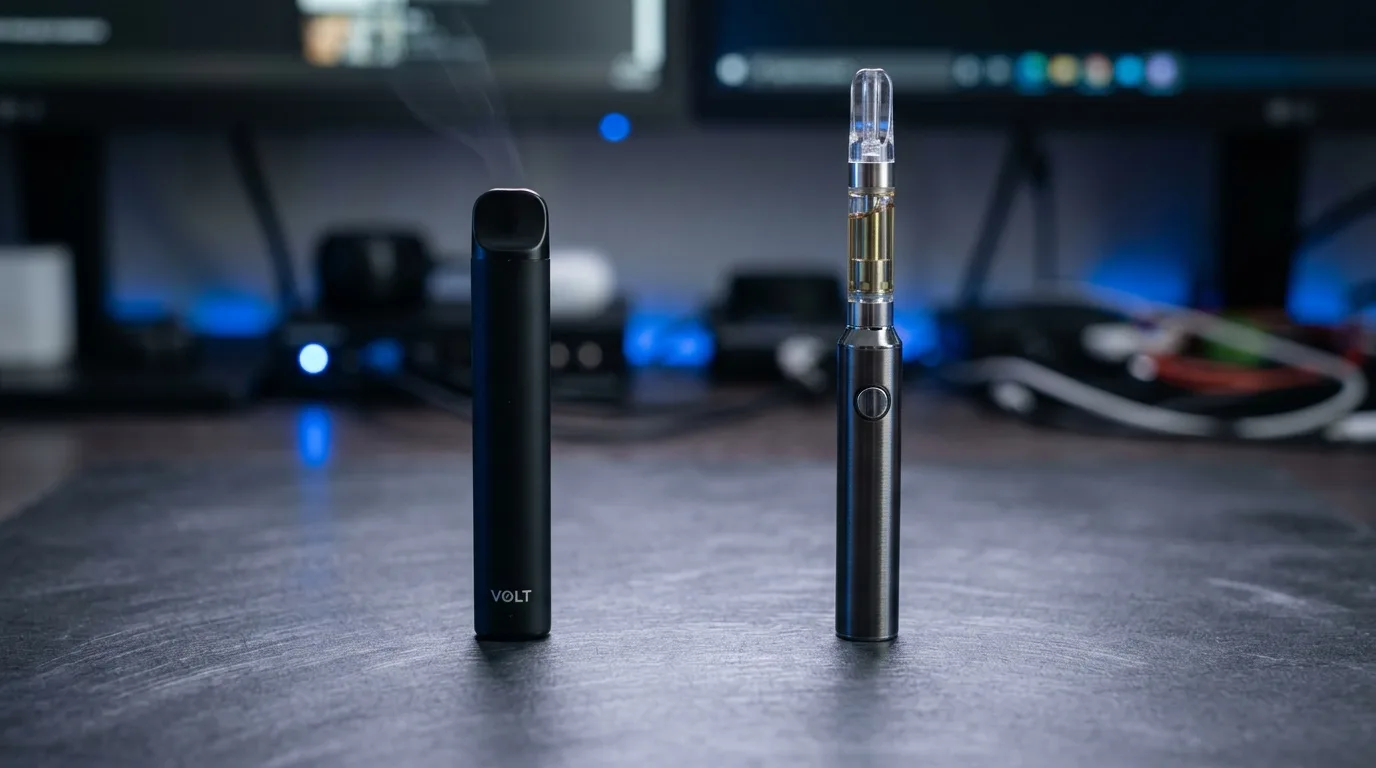
Disposable Vape vs Cartridge: A Buyer's Guide to Convenience, Cost & Quality
Both deliver concentrated cannabis on the go. They differ on price, battery life, refillability, and the type of buyer they suit. Here's how to pick the right one.
If you've decided you want a cannabis vape but you're staring at the catalog choice between disposable vape and 510-thread cartridge, you're not alone. This is the most common buyer-confusion question in vape product categories. The answer depends on three things: how often you'll use it, how much you care about long-term cost, and how much you want to tinker with hardware.
We'll walk through the differences side-by-side, the use cases where each one wins, and what to actually look for when you're shopping either category.
Quick Anatomy of Each
Disposable Vape
A disposable is a sealed all-in-one unit. Battery, atomizer (the heating element), and oil tank are built into the same device. You inhale, the battery automatically activates, the oil vaporizes. When the oil runs out, you throw the device away.
No buttons to press in most modern designs (auto-draw activation).
Pre-charged battery sized to last the lifespan of the oil.
Pocket-sized — about the size of a thick pen.
Replaceable USB-C charging port on some models so you can finish the oil even if the battery runs low.
Cartridge (510-Thread)
A cartridge is just the tank — a glass or plastic chamber holding cannabis oil with a threaded base that screws into a separate battery. The battery is the 'mod' or 'pen' you reuse with different cartridges.
Standard 510-thread connection (an industry-wide standard).
Single battery works with cartridges from any compatible brand.
Some batteries have variable voltage so you can adjust draw temperature.
Replace the cartridge when empty; keep the battery for years.
Cartridges are the razor-and-blade model — invest in the handle once, swap the blades forever. Disposables are the razor-and-blade combined into one tool you throw away.
The Real Differences That Matter
Per-Use Cost
After 4-5 uses, cartridges win.
Disposable: $25-60 per device, all-in.
Cartridge setup: $20-40 one-time battery + $30-60 per cartridge.
Math: if you'll buy 5+ vape units in your lifetime, cartridges save you about $20 per future device.
Convenience
Disposables win on simplicity. Open the package, inhale, you're done. No charging cables to remember. No threading. No 'wait, did I tighten it enough?' frustration.
Cartridges require a few extra steps — initial battery charging, screwing the cartridge in (don't over-tighten), and remembering where you left the battery. For most people this is a 30-second routine; for occasional vape users it can be enough friction to choose disposable.
Battery Life
Disposables are sized to last the oil — the battery and the oil deplete together. No mid-day 'my battery died' problems.
Reusable 510 batteries last 300-500 charge cycles, which translates to roughly 2-3 years of regular use. The downside: if the battery dies mid-day or you forget to charge it overnight, your cartridge is useless until it's powered up again.
Flavor & Vapor Quality
Disposables and cartridges from the same producer use the same oil. Flavor is determined by the oil, not the hardware. That said, there are quality differences in atomizers:
Ceramic coil atomizers (better disposables and premium cartridges) — cleaner taste, more even heat, less burnt-flavor risk.
Cotton-wick atomizers (cheaper devices) — adequate flavor but more burnt-flavor risk if you chain-pull.
Variable-voltage batteries (some 510 setups) — lower voltage = better flavor, higher voltage = bigger clouds. Disposables don't usually allow voltage adjustment.
Discretion
Both are very discreet. Vapes don't produce the lingering smell of combusted flower. Disposables and cartridges look identical from the outside (small pen-shaped device), and neither produces visible smoke at typical draw temperatures.
Slight edge to disposables for travel and going out because there's no separate battery to remember.
Cannabis Selection
Cartridges win on selection. Because the 510 standard is universal, almost every cannabis brand makes cartridges. Disposables tend to come in fewer strain options per brand because they require dedicated hardware and packaging for each SKU.
Environmental Impact
Cartridges win. One battery + many cartridges produces less e-waste than many full disposable units. Most disposables aren't easily recyclable because the battery is sealed inside.
Side-by-Side Summary
Disposable Vape — Best For
First-time vape users
Occasional or social-only use
Travel and going out
Gift-giving (no separate hardware to buy)
People who hate maintenance and charging
Cartridge + 510 Battery — Best For
Daily or frequent vape users
Cost-conscious buyers (long-term savings)
People who want strain variety
Hardware enthusiasts (variable voltage, multiple batteries)
Environmental concerns about waste
What to Look For When Buying Either
1. Lab-Tested Oil
This is non-negotiable. Buy only from retailers that publish third-party Certificates of Analysis (COAs). The COA should confirm:
Cannabinoid potency (THCa, Delta-9 THC under 0.3% for federal compliance)
Terpene profile
Absence of pesticides, heavy metals, residual solvents
Absence of vitamin E acetate (the additive linked to the 2019-2020 EVALI lung-injury outbreak)
All WHAM disposables come with the COA linked from the product page. Browse our lab tests directory to verify any batch.
2. No Cutting Agents
Cheap vapes use cutting agents like propylene glycol, MCT oil, or — most dangerously — vitamin E acetate. Quality cannabis vapes contain only cannabis extract and reintroduced cannabis terpenes. The COA should explicitly note 'no cutting agents' or list ingredients with cannabis-derived terpenes only.
3. Hardware Quality
Ceramic-coil atomizers are the modern standard. Look for product descriptions that explicitly mention ceramic. Cheap cotton-wick atomizers can produce burnt flavors and have shorter useful lifespans.
4. Strain Information
A reputable brand specifies the strain, the cannabinoid content, and the terpene profile. Vague 'indica/sativa/hybrid' labels without specific strain names are a yellow flag — the brand likely uses generic distillate with added flavors instead of cannabis-specific extracts.
How to Choose for Your Situation
Scenario: First-Time Cannabis User
Pick a disposable. Less setup friction, easier dosing (one inhale at a time, wait, reassess), no hardware investment if you decide vapes aren't for you. Start with a balanced hybrid disposable from our catalog.
Scenario: Smoker Looking for a Discreet Backup
Disposable. Throw it in a bag, take it out when needed. No battery to forget at home.
Scenario: Daily User Switching from Flower
Cartridge + battery. The math works strongly in your favor over a few weeks. Variable-voltage 510 batteries also let you fine-tune the experience.
Scenario: Frequent Traveler
Disposable. TSA hassles with separate batteries can be more of a headache than just throwing a sealed disposable in your carry-on.
Scenario: Connoisseur Building a Strain Collection
Cartridge. The selection is wider, you can rotate through strains as the mood strikes, and you're not buying a new battery for each strain.
Common Mistakes to Avoid
Over-tightening cartridges. Damages the threading and can crack the cartridge. Hand-tight is enough.
Storing vapes in extreme heat. Hot car interiors can leak oil out of the cartridge or damage the disposable battery.
Chain-puffing. Taking many quick consecutive draws produces burnt-flavor oil and shortens device life. Pause 15-30 seconds between draws.
Buying off-brand from convenience stores. The 2019-2020 EVALI lung-injury outbreak was almost entirely traced to illicit-market vapes. Stick with retailers that publish COAs.
Mixing brands of cartridge with off-brand batteries. Some no-name batteries deliver inconsistent voltage and produce burnt flavors even with quality oil. Stick with reputable 510 batteries.
Related Reading
Flower vs Concentrate — for the broader form-factor comparison.
How to Dose THCa for Beginners — covers dosing across formats.
THCa vs Delta-9 THC: 11 Differences — for the legal and chemical background on what's actually in your vape.
Ready to shop? Browse our disposables collection, all lab-tested and federally compliant.
Disclaimer: This article is educational. WHAM products are for adults 21+ in states where hemp-derived THCa is legal. Don't drive or operate machinery while under the effects of cannabis. People with respiratory conditions should consult a doctor before using vape products.
Fresh for 2026 — the trade-off is unchanged in 2026: disposables win on convenience, 510 carts win on cost-per-gram and reusability — match it to how often you actually vape.
Keep reading & shop
Flower vs Concentrate: How to Pick the Right Form Factor for Your Use Case
How Long Does a Disposable Vape Last? (Puff Counts, Real Numbers)
Shop: Shop THCa disposables
What the writer recommends
6 hand-picked products
Further reading
Resources & References
Quick answers
Frequently asked
A disposable vape is an all-in-one unit with a built-in battery, pre-filled tank, and atomizer — designed to be used until empty, then discarded. A cartridge is just the tank — you screw it onto a reusable 510-thread battery you buy separately. Cartridges are cheaper per use; disposables are simpler.
Cartridges, over time. A 510-thread battery is a one-time purchase ($20-40) and cartridges run $30-60 each. Disposables are $25-60 each but you pay for the battery every time. After 4-5 uses, cartridges win on per-dose cost.
No — the cannabis oil itself is the same. Quality is determined by the producer and extraction method, not the hardware. The same producer often makes both formats from the same oil batch.
Less harmful, possibly. Vaporizing avoids combustion and the resulting tar and carbon monoxide. Studies suggest reduced respiratory impact compared to smoking. But vapes aren't risk-free — quality matters, and counterfeit products were the cause of the 2019-2020 EVALI lung injury outbreak. Buy lab-tested vapes from reputable retailers only.
Typical 1-gram disposable lasts 200-400 puffs depending on draw length. For occasional use, that's weeks. For daily heavy use, 5-7 days. The battery and oil are sized to deplete together.
Keep reading
More from the editorial
Articles in Education and across the WHAM Read.
 Education2 min
How Long Does a THC High Last? (2026 Timeline)
A smoked or vaped THC high usually peaks within 10 minutes and lasts about 1–3 hours; THC edibles run 4–8 hours. This guide breaks down how long a THC high lasts by method, what changes the duration, and how to come down faster if you need to.
 Education4 min
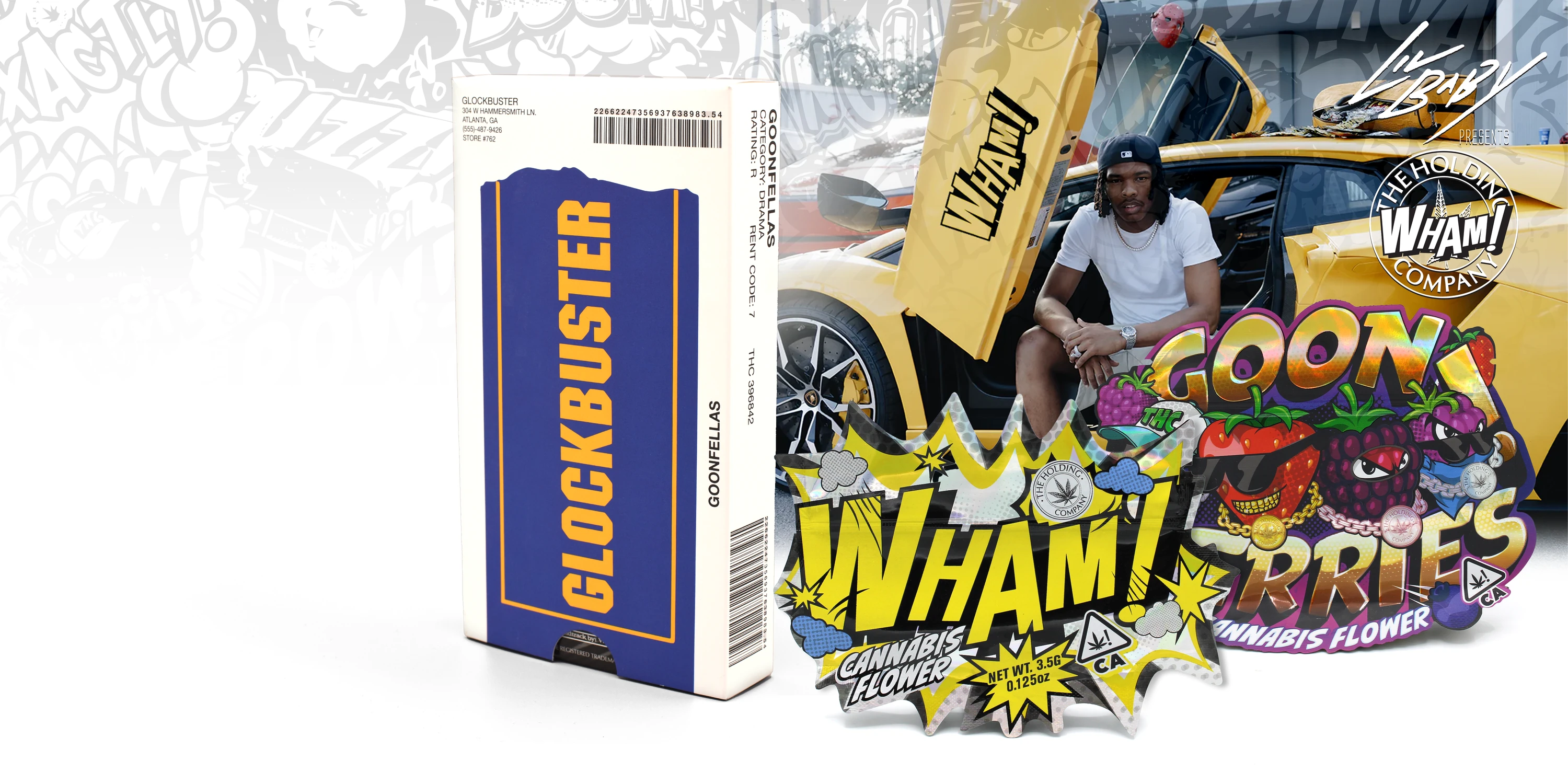
What Are WHAM Packs? Lil Baby Weed Packs, Sizes and Prices
A WHAM pack is a quarter pound to a full pound of Lil Baby's weed, mixed with some disposables and shipped in a double-sealed, nitrogen-sealed, smell-proof packet. Here are the sizes, how the pricing works, and how to order one.
Education4 minWhat Strain Is Lil Baby's Weed? The WHAM Strains Explained
Lil Baby's weed isn't a single strain — WHAM is his brand, with around 90 flower options on the menu. Most are hybrids, with indica picks like Alien ET and sativa picks like Sour Diesel. Here are the best sellers and how to pick one.

Get 5% off + the best reads in your inbox
Join 50,000+ subscribers. One short editorial email a week — unsubscribe any time.
No spam · unsubscribe in one click