Free shipping on orders $100 or more. Order by 4 PM Eastern and it ships today. Subscribe and get 10% off at checkout. We ship to all 50 states, no medical card needed. Get 5% off orders $200 or more in the WHAM app.

12 articles tagged thc.
 Education3 min
THCa vs THC vs CBD explained: THCa is the raw form in hemp flower that becomes THC when heated, THC (delta-9) is the compound that gets you high, and CBD is non-intoxicating and used for calm. Compare effects, legality, and which to choose.
 Education3 min
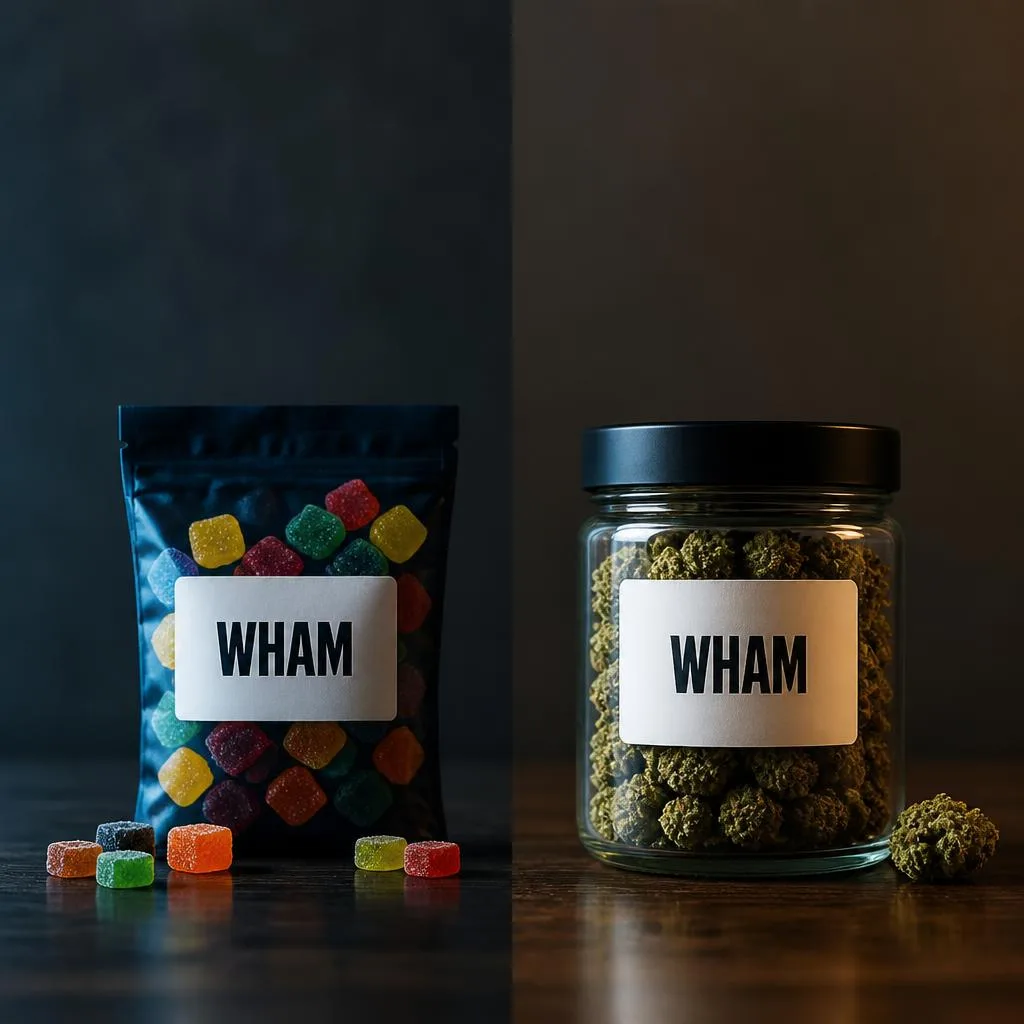
Gummies and flower deliver the same compound by very different routes. Inhaling works in minutes and fades in one to three hours; edibles take up to ninety minutes, last far longer, and hit harder because your liver converts THC into a stronger compound. Here's how to pick the right one.
 Education3 min
Hemp-derived THC gummies are federally legal when the finished product contains no more than 0.3% delta-9 THC by dry weight. Because that limit is a percentage of weight, not a cap on milligrams, a compliant gummy can carry a real dose. Here's how that works, and why your state still decides.
 How To4 min
Buying THC wholesale means volume tiers instead of unit prices, minimum order quantities, and paperwork retail buyers never see. This walkthrough covers how tiers work, what MOQs to expect on flower versus units, which lab documents to demand, and how to place a first order without overcommitting.
 Education4 min
Hemp-derived THC is federally legal under the 2018 Farm Bill when a product stays at or below 0.3% delta-9 THC by dry weight. Marijuana-derived THC remains federally controlled. States write their own rules on top, several restrict hemp THC outright, and a few measure total THC instead. Here's the whole picture.
 Education4 min
THC isn't one compound — it's a family. Delta-9 is the reference, THCa is its raw precursor, delta-8 is a milder isomer, and THCV, THCP and HHC are separate molecules again. This guide explains each, roughly how strong it is, which are federally legal, and which is worth your money.
 Education3 min
THC and CBD come from the same plant and even the same precursor, but they behave very differently. THC binds CB1 receptors and is intoxicating; CBD barely binds them and is not. This guide covers effects, legality, drug testing, the full-spectrum trap, and how to choose between them.
 Education4 min
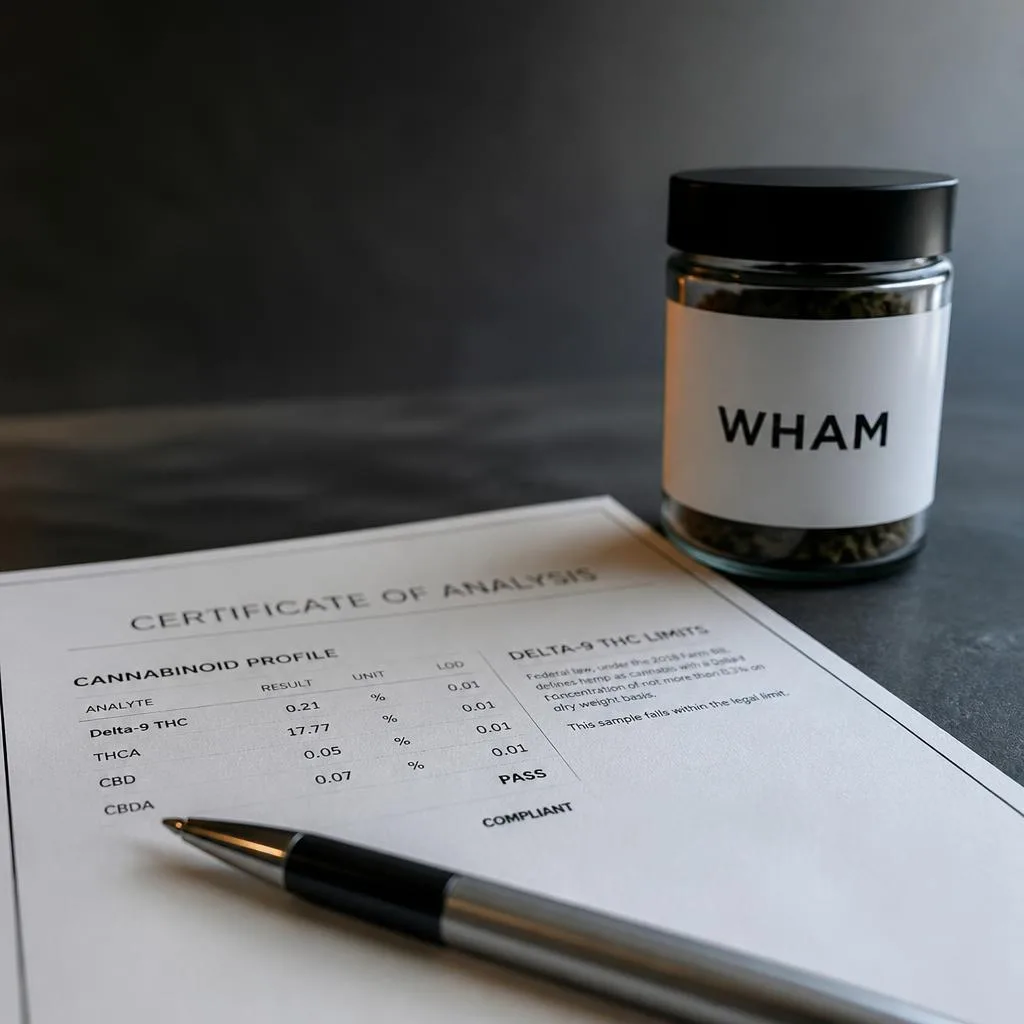
Delta-9 THC is the primary intoxicating compound in cannabis and the exact molecule the 0.3% federal hemp limit refers to. Understanding it explains the whole legal landscape: why hemp flower is legal, why THCa products work, how delta-8 differs, and what to read on a lab panel.
 How To5 min
There's no universal THC dose, but there are reliable starting points: 2.5-5mg for a first edible, one small inhale for flower, then wait. Tolerance, product type and body chemistry move the number far more than strain does. This guide covers both units, every format, and how to find yours without a bad night.
 Education5 min
A THC high usually starts within minutes of inhaling: a light head-lift, sharper senses, then relaxation and hunger. It peaks around thirty minutes and fades over one to three hours. Dose decides almost everything — the same flower is pleasant at one hit and overwhelming at five. Here's the full arc, including what going too far feels like.
 Education3 min
THC itself clears quickly; the metabolites tests look for do not. Urine tests detect roughly 3 days after occasional use and 30+ days for heavy daily users. Blood is 1-2 days, saliva 1-3 days, hair up to 90. This guide covers each window, what changes it, and the honest answer on speeding it up.
 Education3 min
THC (delta-9-tetrahydrocannabinol) is the compound responsible for the high. Raw hemp and cannabis barely contain any — they carry THCa, which converts to THC the moment you apply heat. This guide covers what THC is, how it works, the different forms you'll see sold, and why hemp-derived THC is federally legal.
Related tags

Join 50,000+ subscribers. One short editorial email a week — unsubscribe any time.
No spam · unsubscribe in one click