
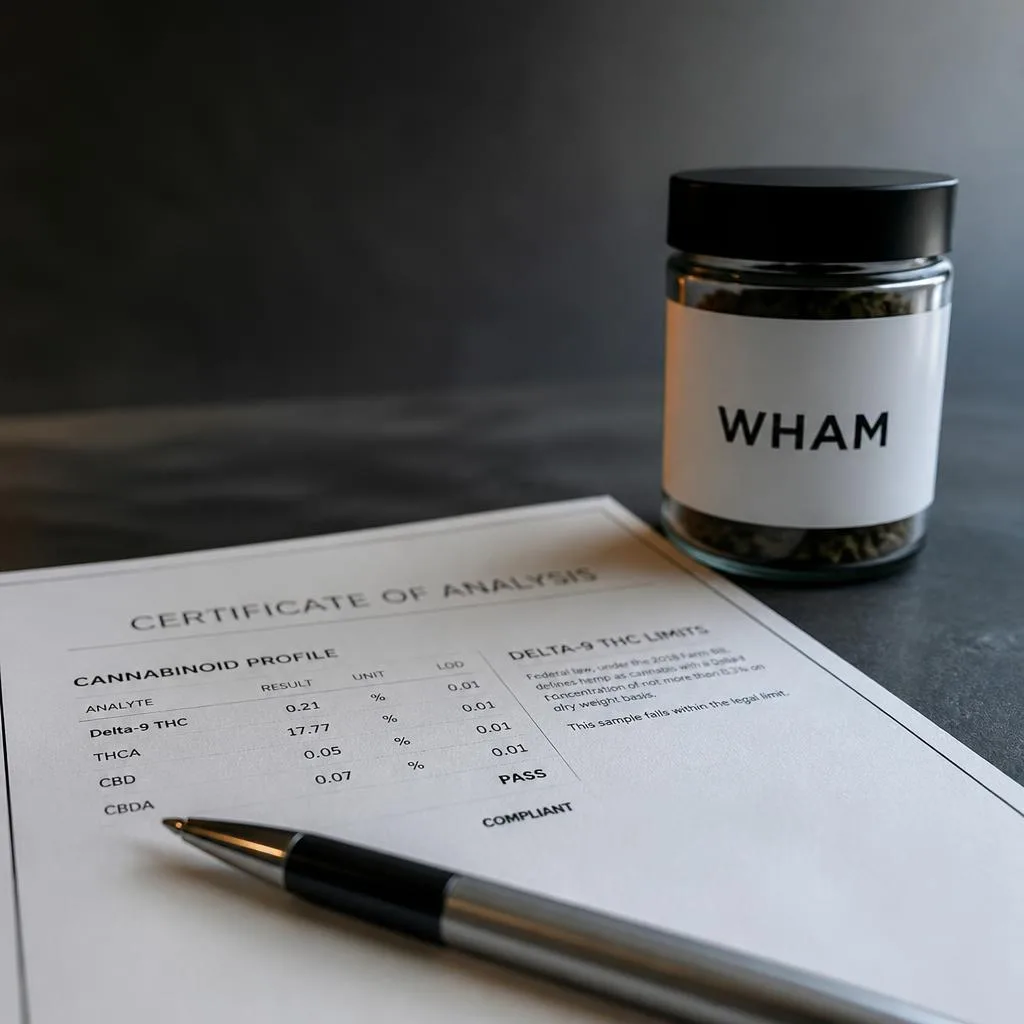
Delta-9 THC, Explained
The original cannabinoid, the one the law measures, and the one every other THC gets compared against. Here's what delta-9 is, and why hemp can legally contain it.
Delta-9 THC is the original. When someone says THC without qualifying it, this is the molecule they mean — and crucially, it is the exact compound the federal hemp limit measures. Understanding delta-9 explains the entire legal landscape around hemp products, including why a jar of flower can be both potent and legal.
Every hemp product on the market exists because of one number: 0.3% delta-9 by dry weight.
What the name actually means
Cannabinoids are named for where a double bond sits in the carbon ring. In delta-9 it sits on the ninth carbon; in delta-8, the eighth. One position on one bond. That difference is small on paper and meaningful in practice — delta-8 is clearly milder, and most people describe it as less anxious. The full comparison is in THCa vs delta-8 vs delta-9 and the wider family in the types of THC.
Why the 0.3% line matters so much
The 2018 Farm Bill removed hemp from the federal controlled-substances definition, defining it as cannabis with no more than 0.3% delta-9 THC by dry weight. Two consequences follow, and together they explain the whole market:
It measures delta-9 only — not THCa, not total cannabinoids.
It is a percentage of weight, not a cap on dose.
That second point is the one most people miss. A compliant flower can carry 20%+ THCa while sitting comfortably under 0.3% delta-9 — and THCa becomes delta-9 the moment you heat it. Full mechanism in what THCa turns into when heated, and the legislative history in the 2018 Farm Bill explained.
Hemp delta-9 and marijuana delta-9 are the same molecule
There is no chemical difference, no 'weaker' version, and no way to tell them apart outside a lab that knows the source. Your body cannot distinguish them and neither can a drug screen — see how long THC stays in your system. Only the legal classification of the plant it came from differs, which is also why a roadside test settles nothing: can police tell THCa from marijuana.
Why delta-9 is the one the law picked
It is a fair question: why measure delta-9 rather than total cannabinoids? The short answer is history. Delta-9 was identified as the compound responsible for intoxication decades before the others were commercially relevant, so it became the reference in law as well as in research. THCa, delta-8 and the rest were simply not on the market when the threshold was written.
That is exactly why the current rules feel strange. A test built for one compound now governs a shelf full of others. It is also why proposals to move to a total-THC standard keep resurfacing — they would close the gap the market currently operates in. Nothing has changed yet; our reading of where it stands is in is THC legal.
Delta-9 in practice, on a shelf
Knowing the theory changes how you read a product page. A few things follow directly:
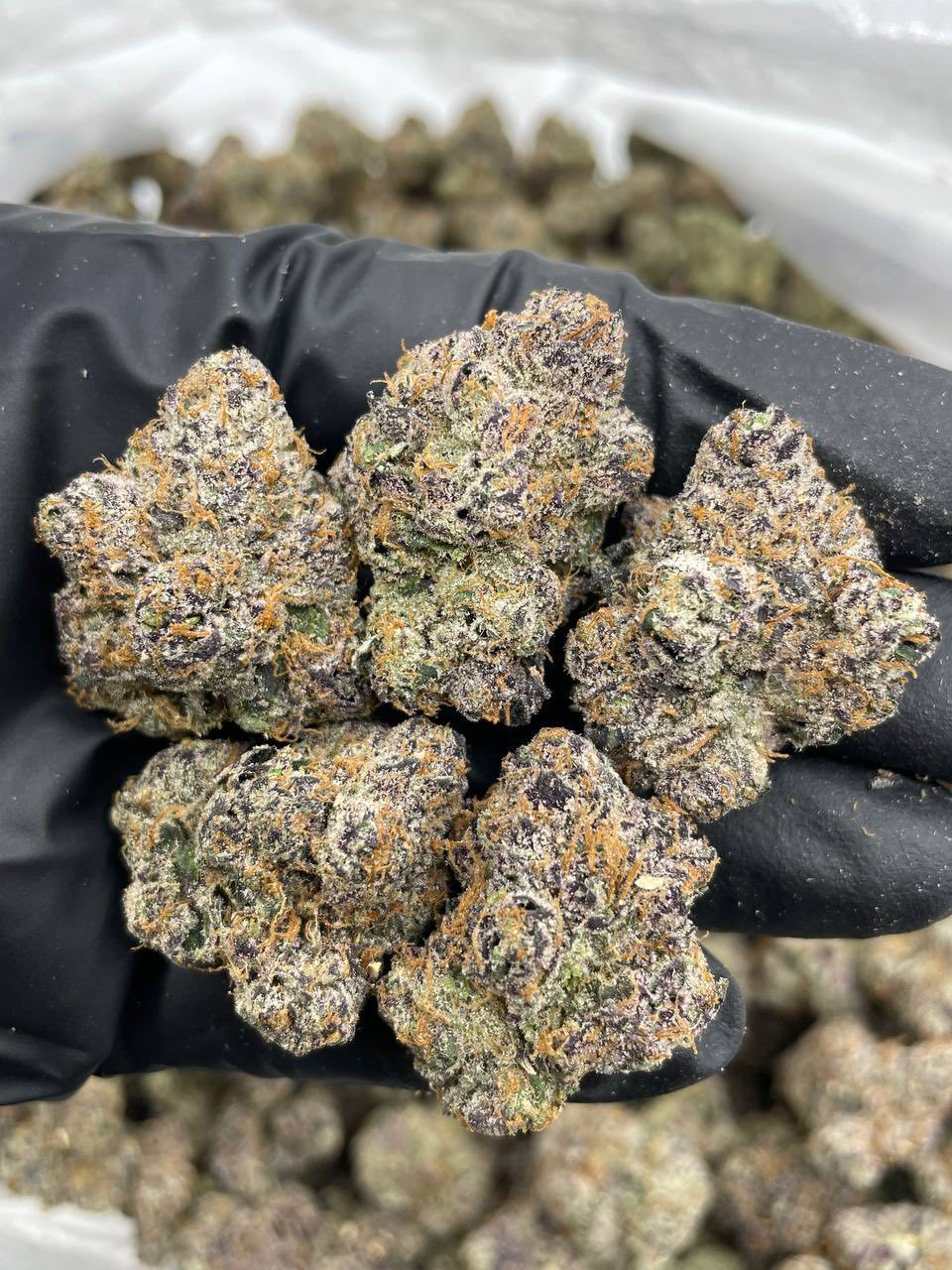
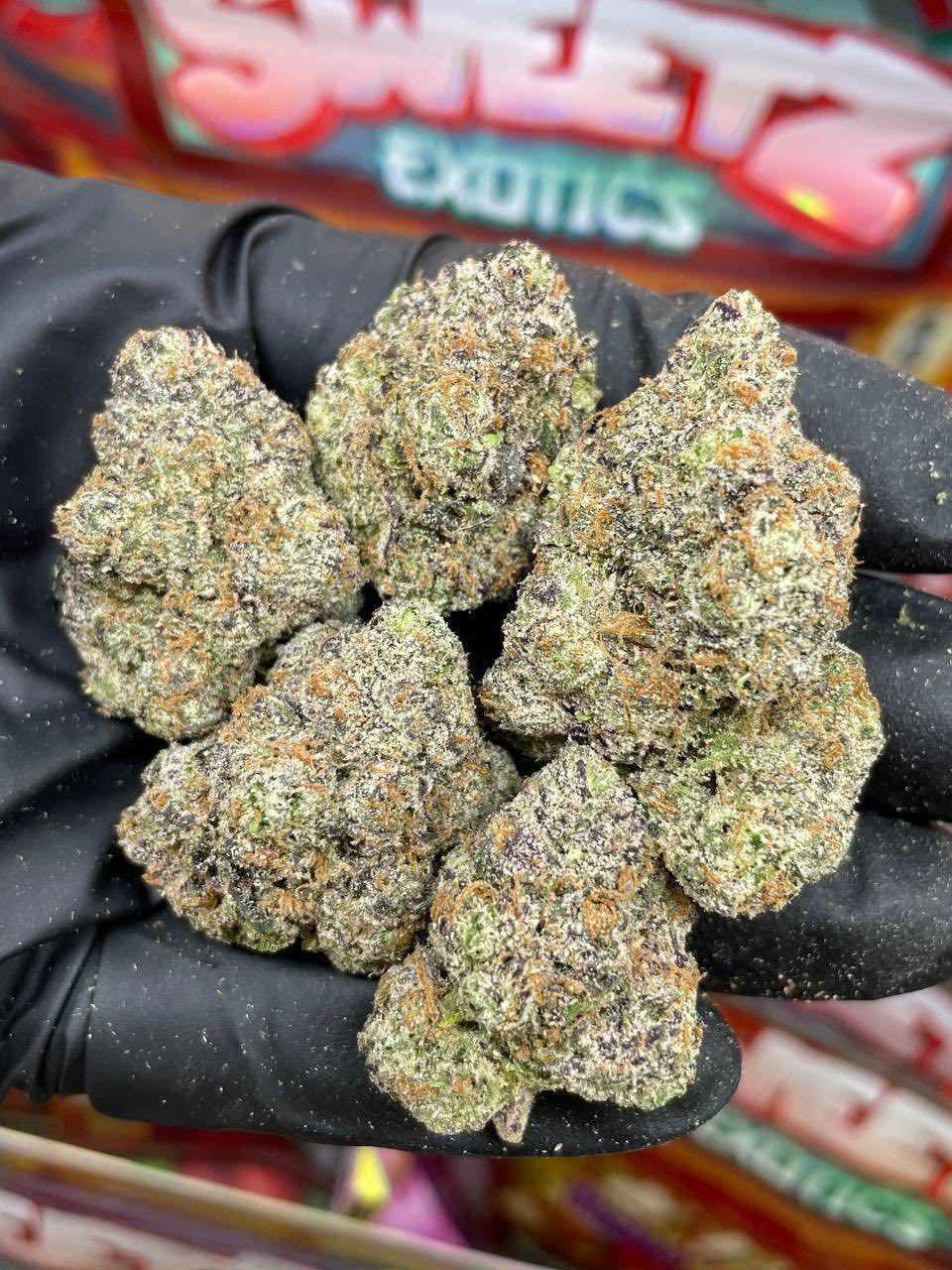
Flower shows a low delta-9 and a high THCa. That is normal and correct — the delta-9 appears when you apply heat.
Edibles show real delta-9 in milligrams. No conversion step, so what is printed is what you get.
Total THC is the useful figure on flower, not the delta-9 line read on its own.
Any product above 0.3% delta-9 by dry weight is not federally legal hemp, whatever the label claims.
Working through an actual certificate is the fastest way to internalise this — how to read a THCa lab report, and every batch we ship publishes one at our lab tests. To see it on real stock, our THC flower collection lists the panel per batch, and flower by the pound does the same at volume.
What it feels like
Onset: minutes inhaled; forty-five to ninety minutes eaten.
Character: euphoria, heightened senses, appetite, altered time perception.
At higher doses: anxiety, racing heart, sedation.
Duration: one to three hours inhaled; considerably longer eaten.
The fuller description is in what a THC high feels like, and how much to take in the THC dosage guide.
State law still applies
Federal law is a floor, not a ceiling. Several states restrict hemp-derived THC regardless of the 0.3% rule, and some regulate total THC rather than delta-9 alone — which changes what qualifies entirely. Check your state and the legality map before ordering. Shipping rules follow from that: can THCa be shipped.
General information, not legal advice. Adults 21+ only.
Keep reading & shop
Shop: Shop THCa flower
What the writer recommends
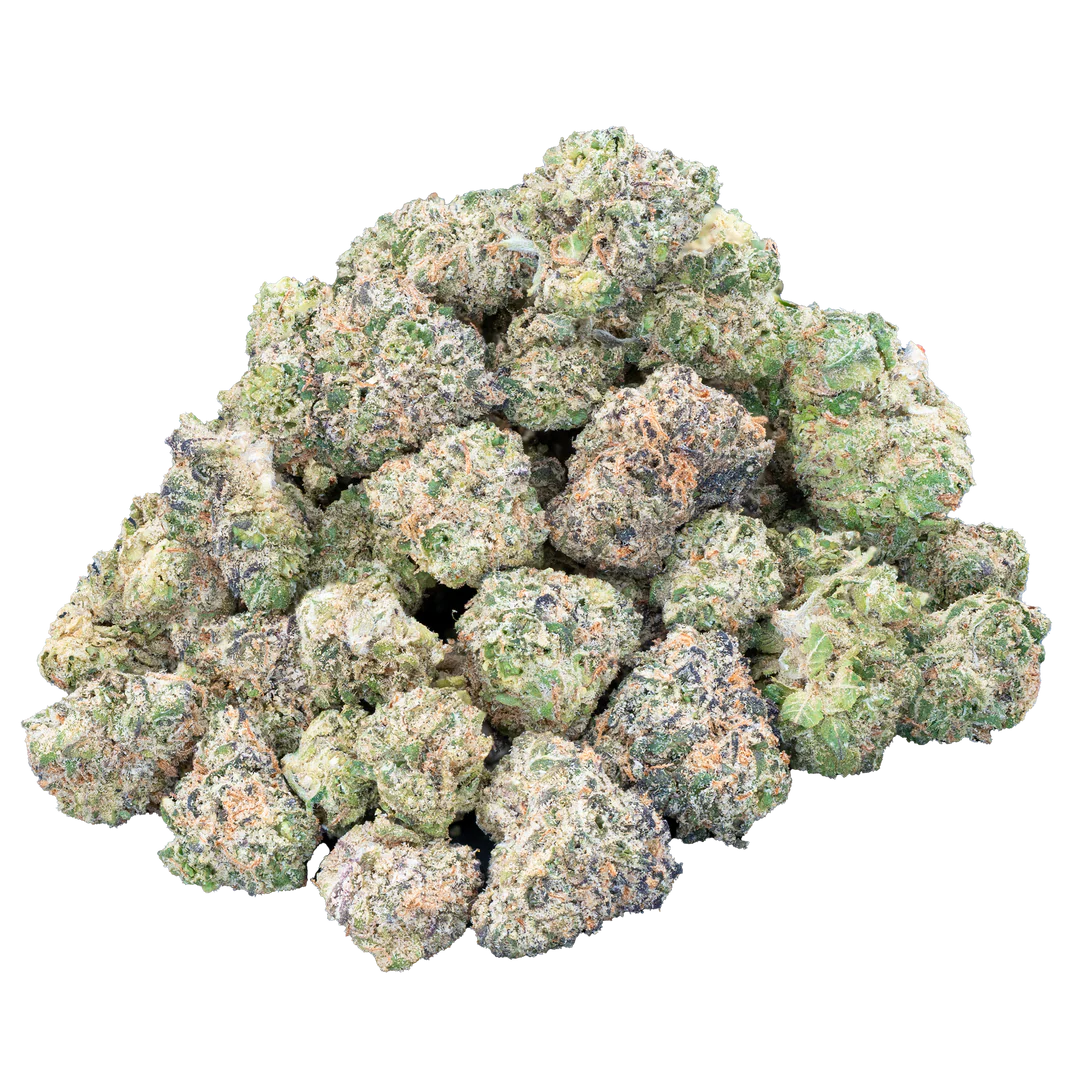
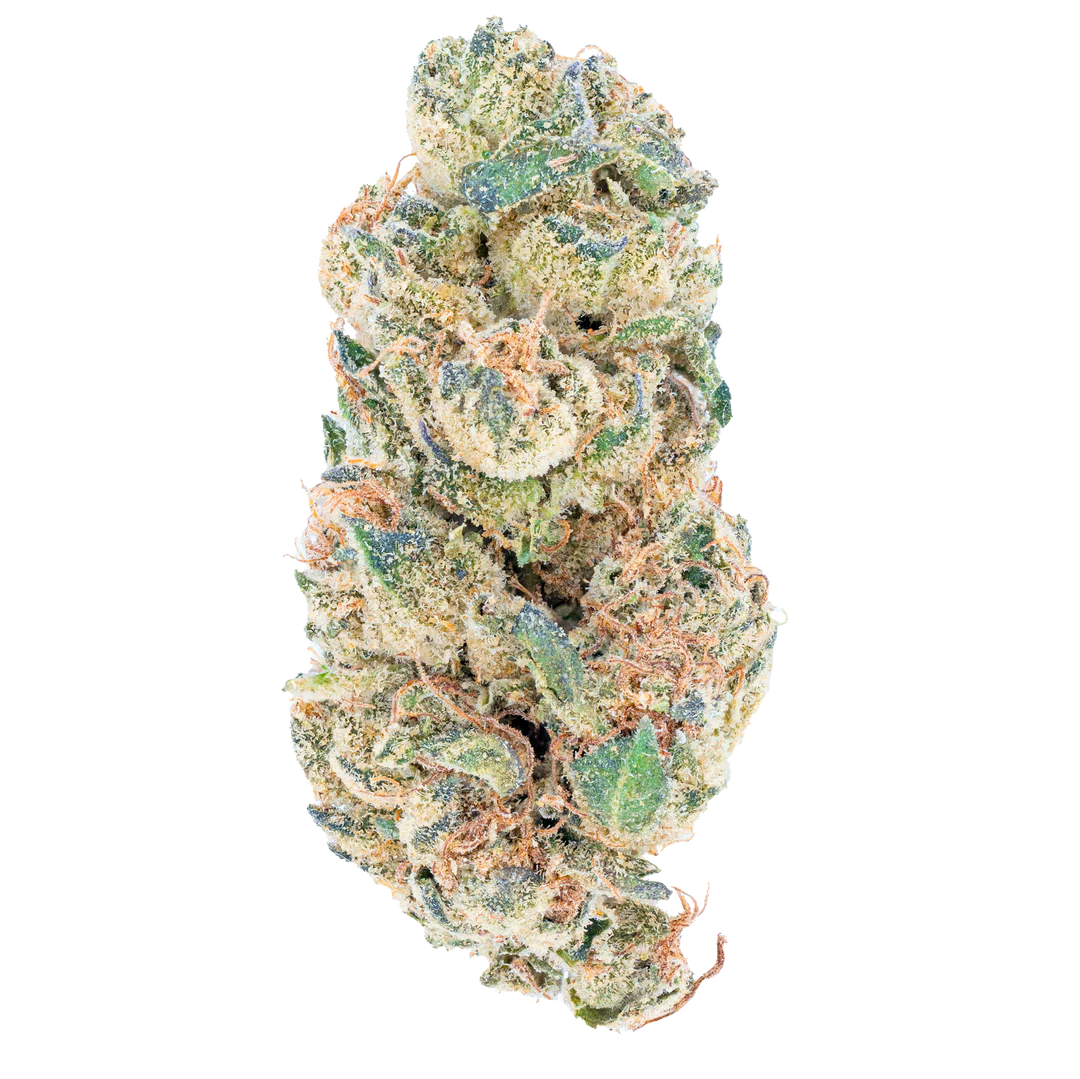
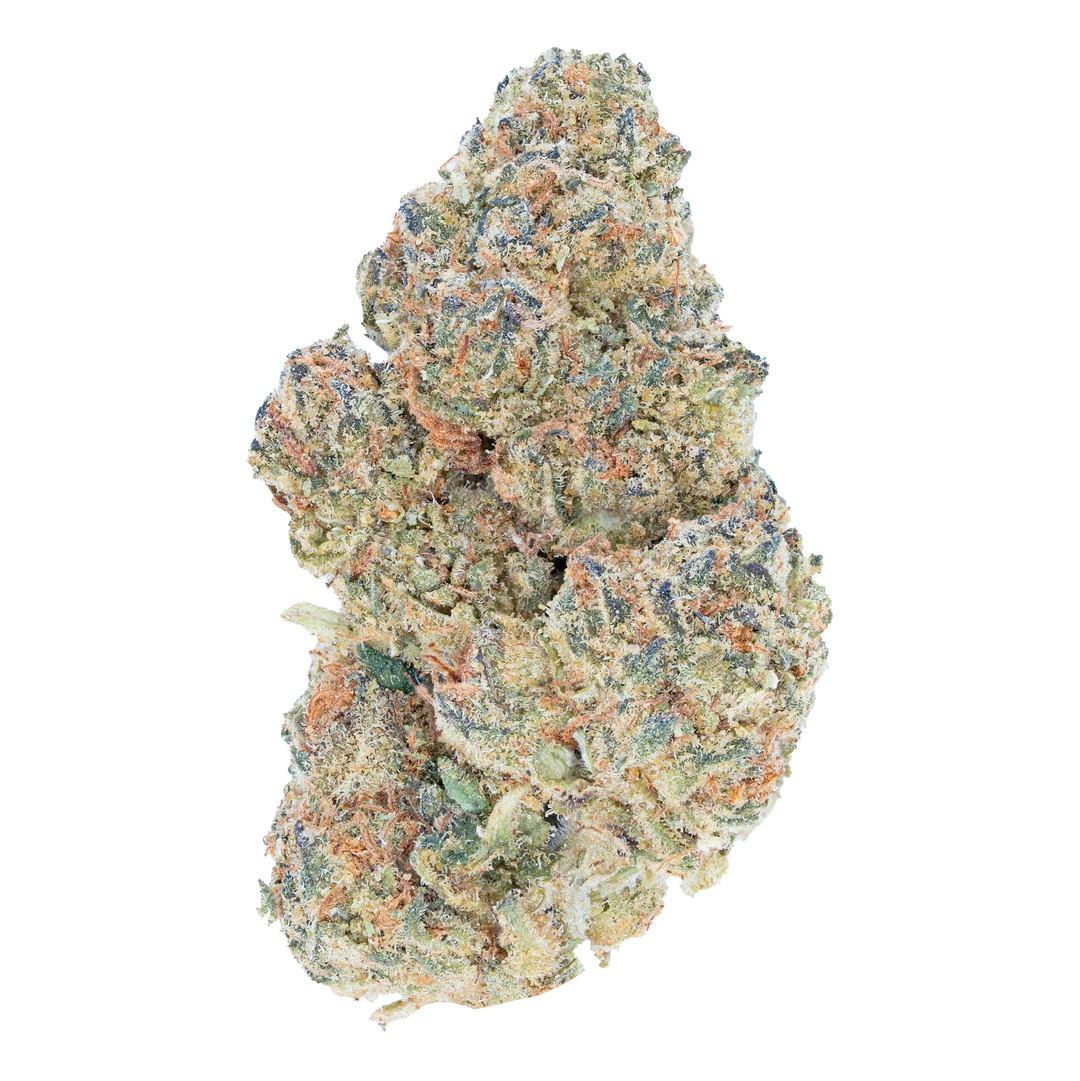
5 hand-picked products
Further reading
Resources & References
Quick answers
Frequently asked
Delta-9 tetrahydrocannabinol is the primary intoxicating compound in cannabis. The name refers to the position of a double bond in its molecular structure. It is the reference cannabinoid — the one federal hemp law measures and the one other THC forms are compared against.
The 2018 Farm Bill defines hemp as cannabis containing no more than 0.3% delta-9 THC by dry weight. That single number separates federally legal hemp from federally controlled marijuana. It measures delta-9 specifically, not total cannabinoids and not THCa.
The double bond sits on the ninth carbon in delta-9 and the eighth in delta-8. That small structural difference makes delta-8 noticeably milder, with users typically reporting a clearer, less intense effect at comparable doses.
Yes — up to 0.3% by dry weight. Because that is a percentage of weight rather than a dose cap, a large enough serving of a compliant product can still deliver a meaningful amount of delta-9, which is exactly how legal hemp edibles work.
No. The molecule is identical regardless of which plant it came from. Your body cannot tell the difference and neither can a drug test. Only the legal classification of the source plant differs.
Low — typically well under 0.3% — alongside a much higher THCa figure, often 20% or more. That combination is what a compliant, potent hemp flower looks like on paper. A high delta-9 reading on raw flower would mean it is not legal hemp.
Keep reading
More from the editorial
Articles in Education and across the WHAM Read.
 Education2 min
How Long Does a THC High Last? (2026 Timeline)
A smoked or vaped THC high usually peaks within 10 minutes and lasts about 1–3 hours; THC edibles run 4–8 hours. This guide breaks down how long a THC high lasts by method, what changes the duration, and how to come down faster if you need to.
 Education4 min
What Are WHAM Packs? Lil Baby Weed Packs, Sizes and Prices
A WHAM pack is a quarter pound to a full pound of Lil Baby's weed, mixed with some disposables and shipped in a double-sealed, nitrogen-sealed, smell-proof packet. Here are the sizes, how the pricing works, and how to order one.
Education4 minWhat Strain Is Lil Baby's Weed? The WHAM Strains Explained
Lil Baby's weed isn't a single strain — WHAM is his brand, with around 90 flower options on the menu. Most are hybrids, with indica picks like Alien ET and sativa picks like Sour Diesel. Here are the best sellers and how to pick one.

Get 5% off + the best reads in your inbox
Join 50,000+ subscribers. One short editorial email a week — unsubscribe any time.
No spam · unsubscribe in one click